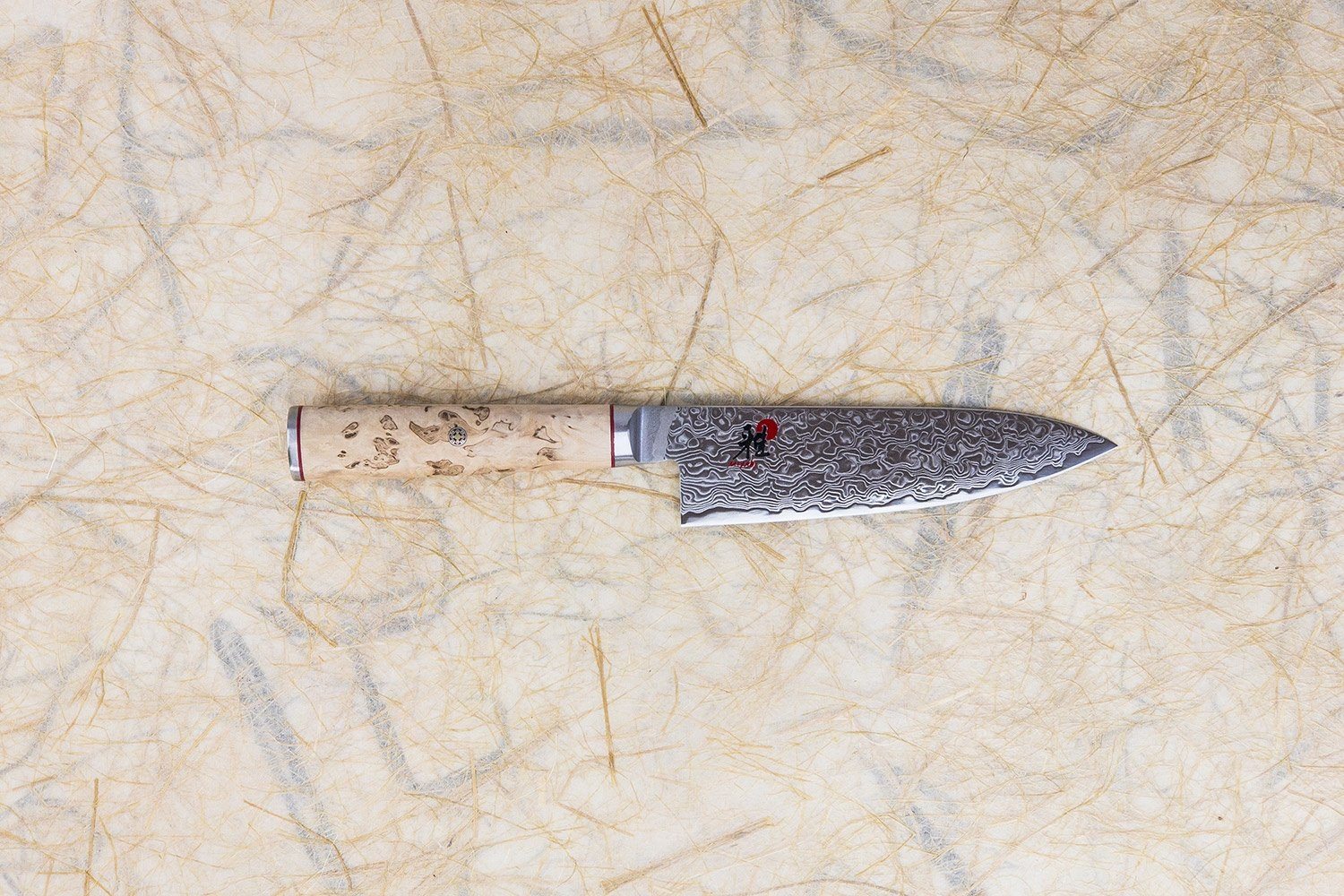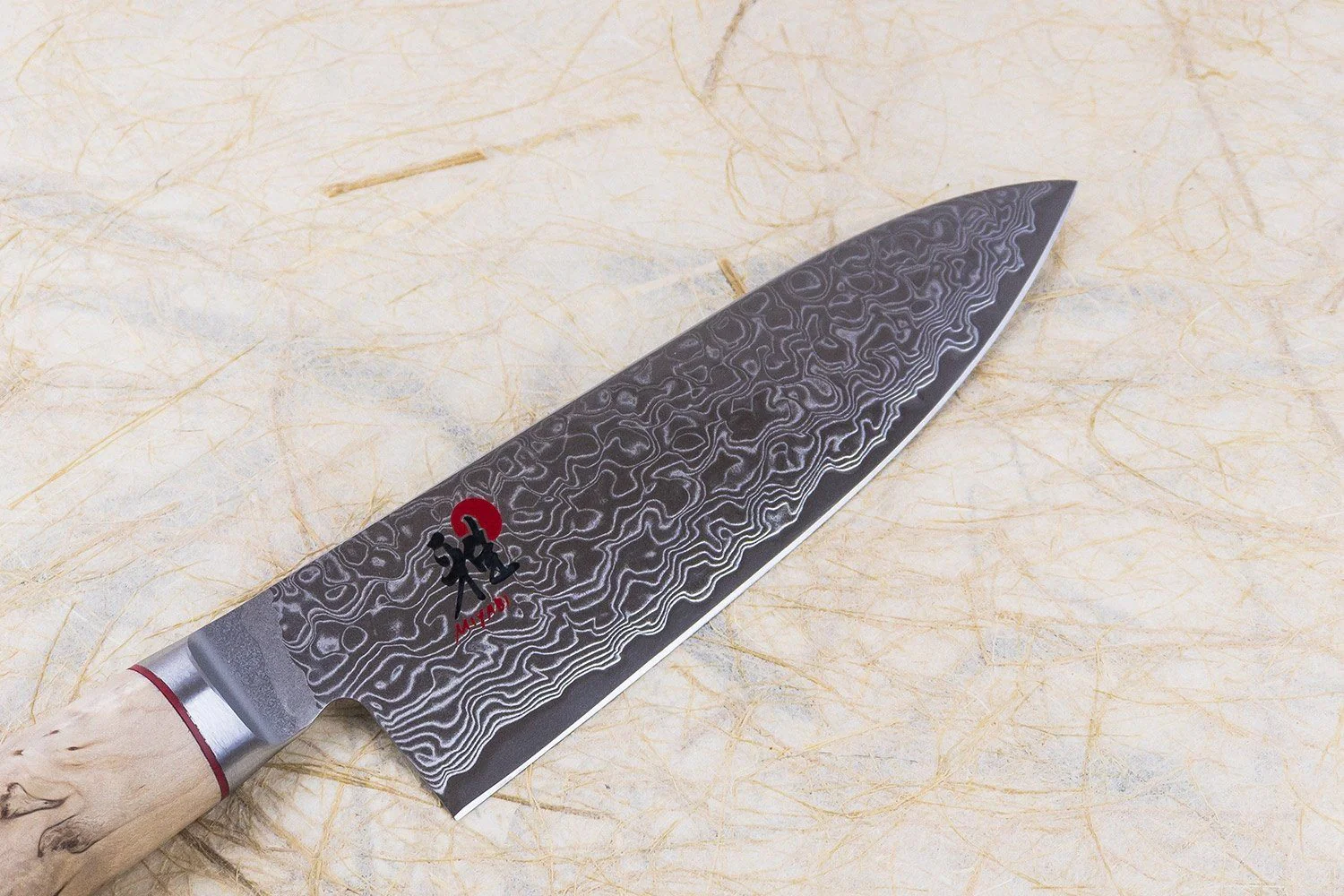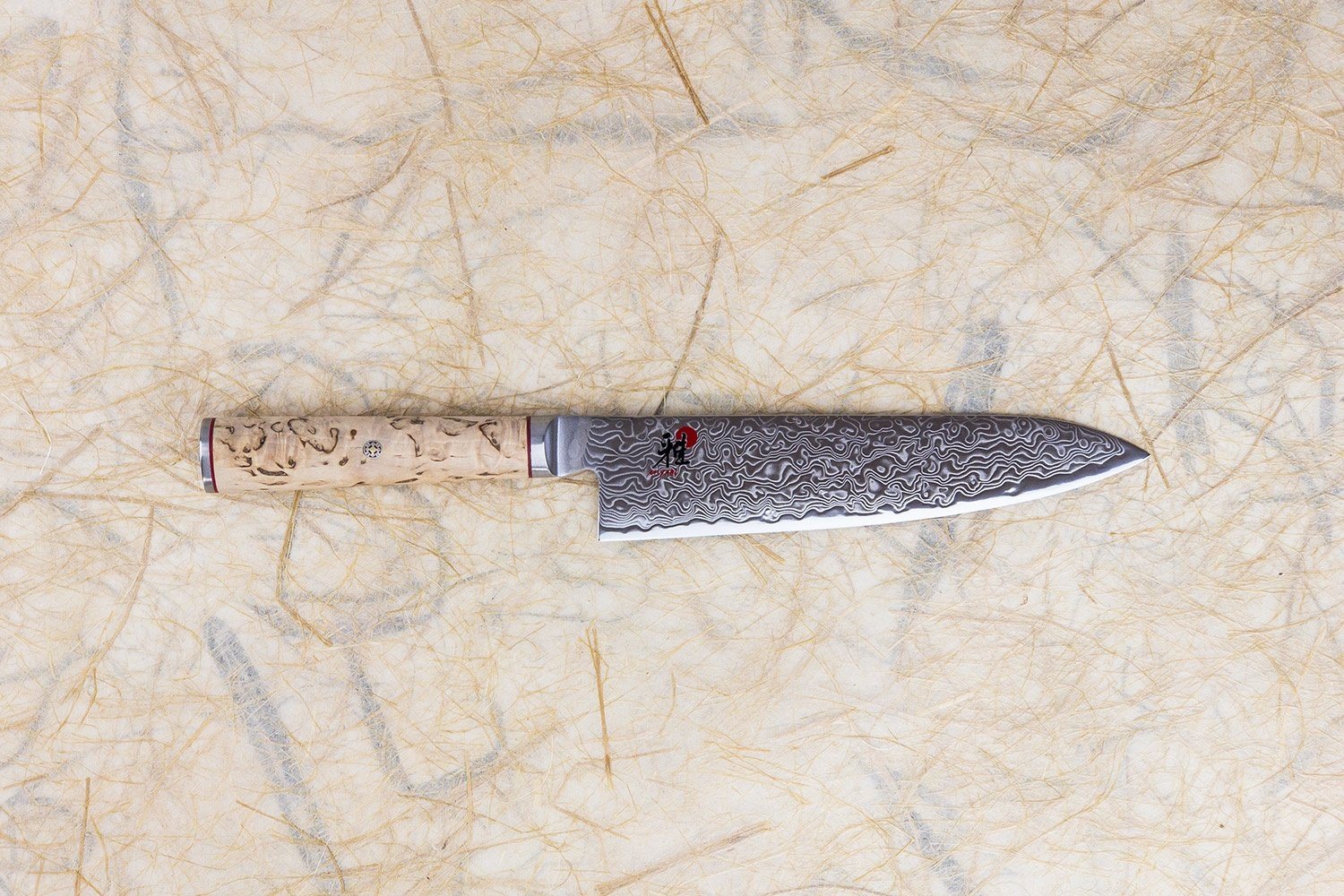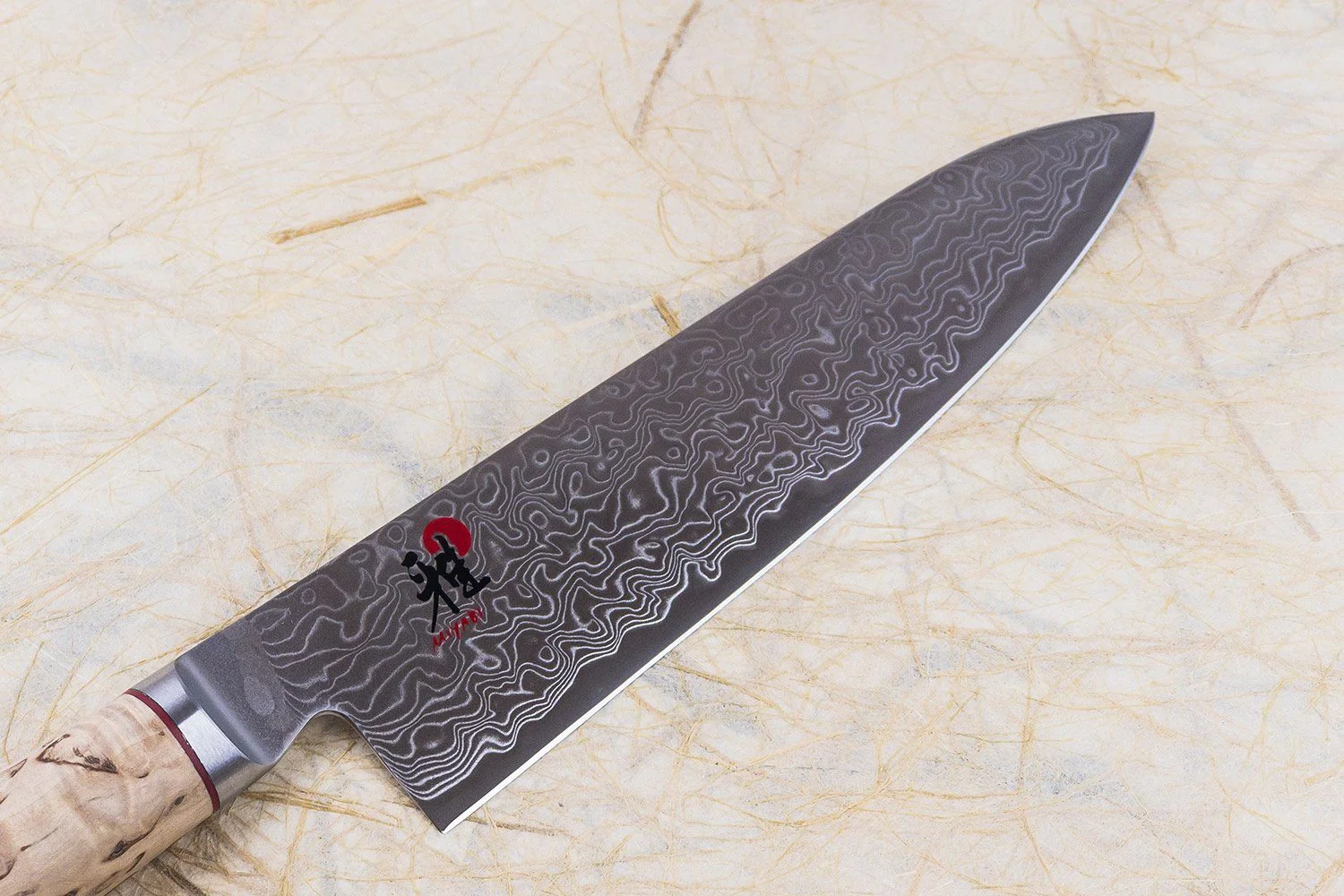
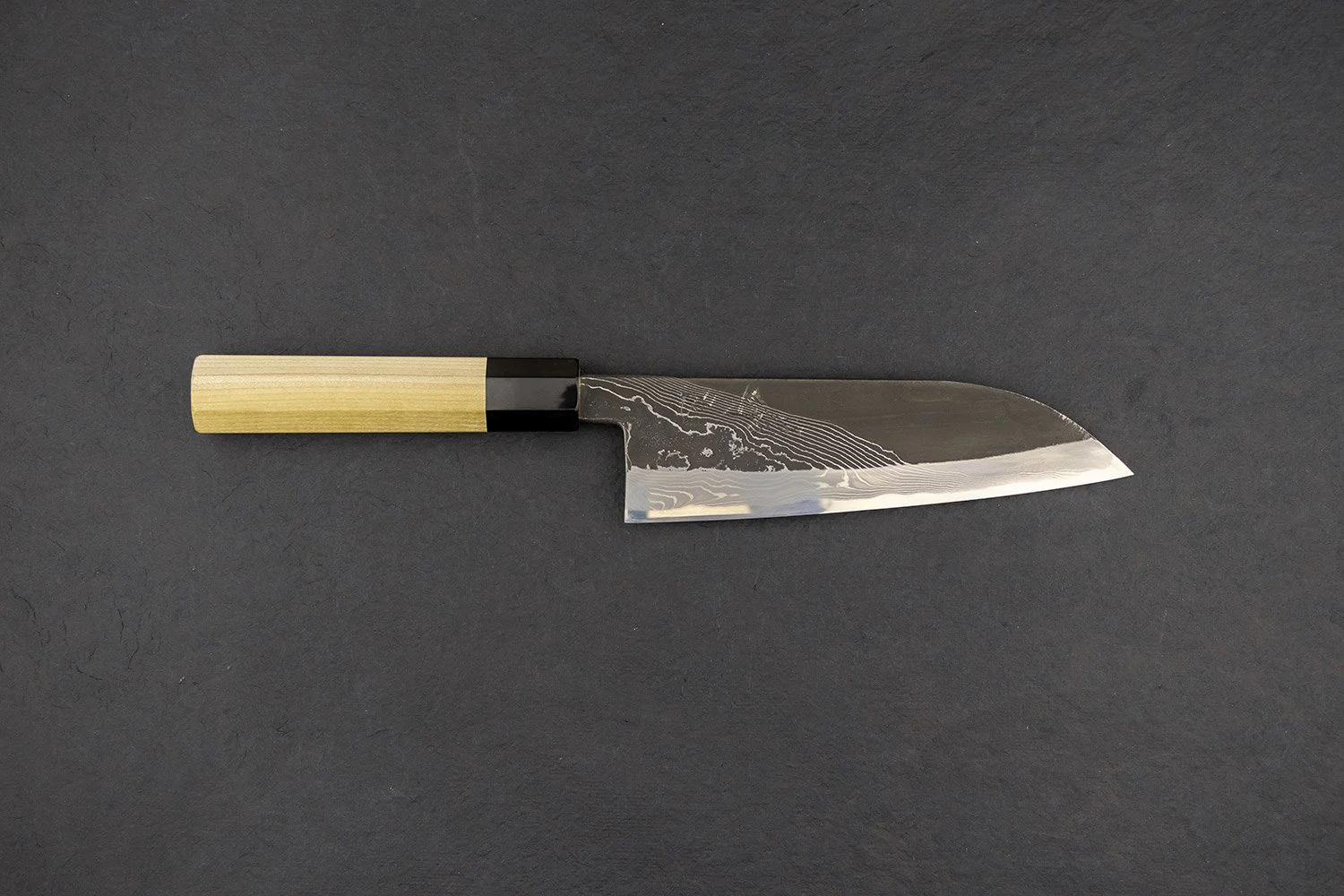
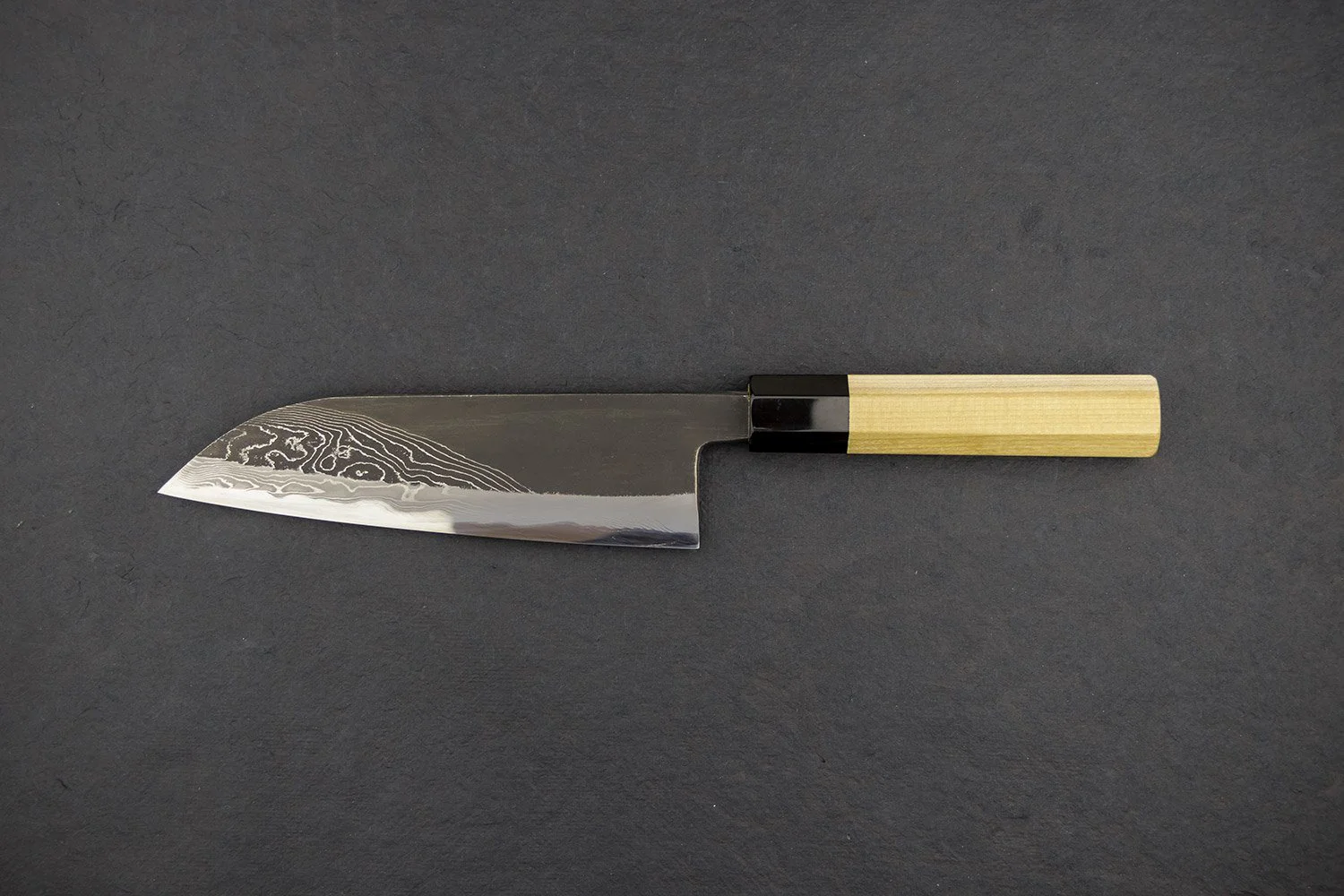
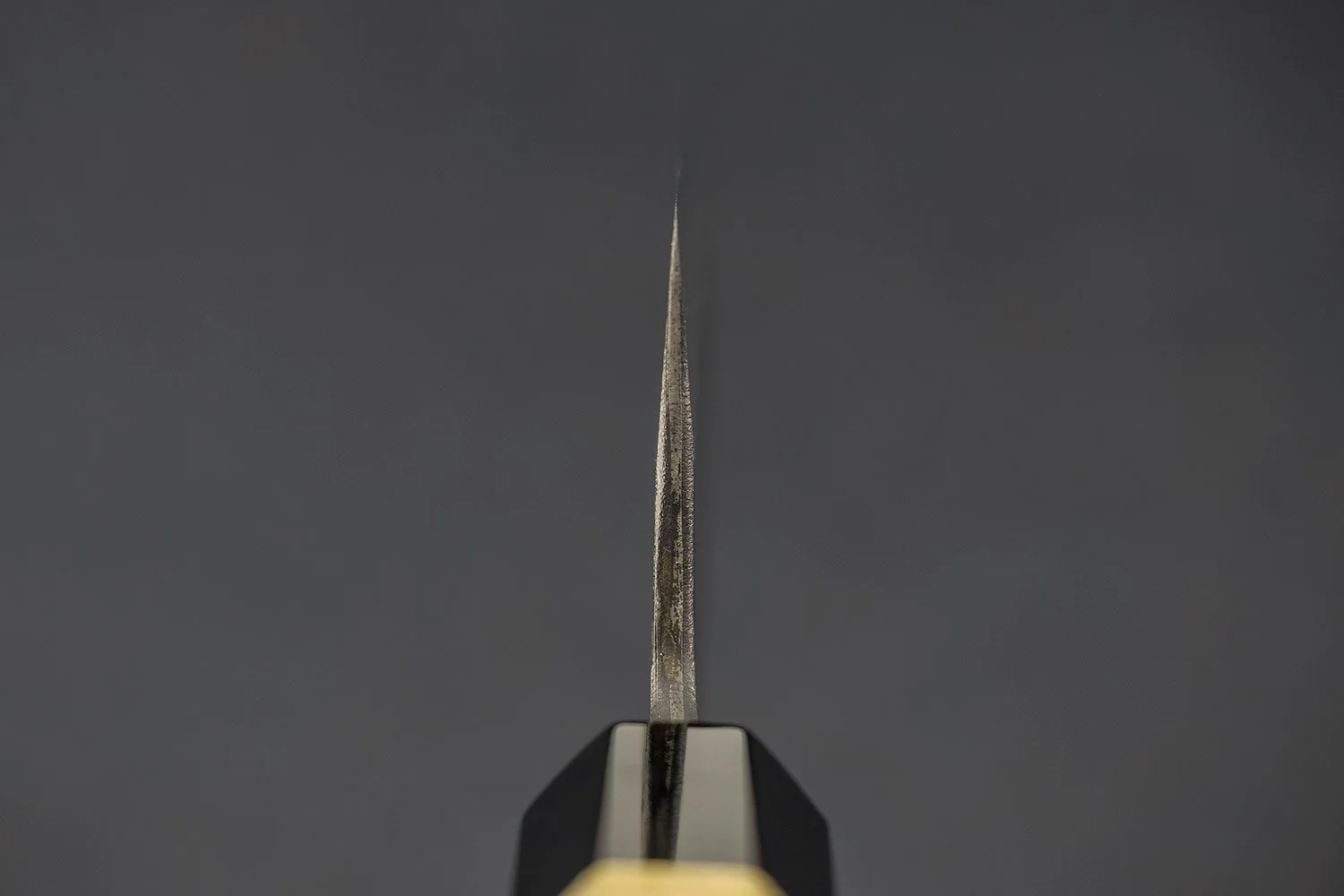
Tsukasa Hinoura River Jump Santoku 165mm
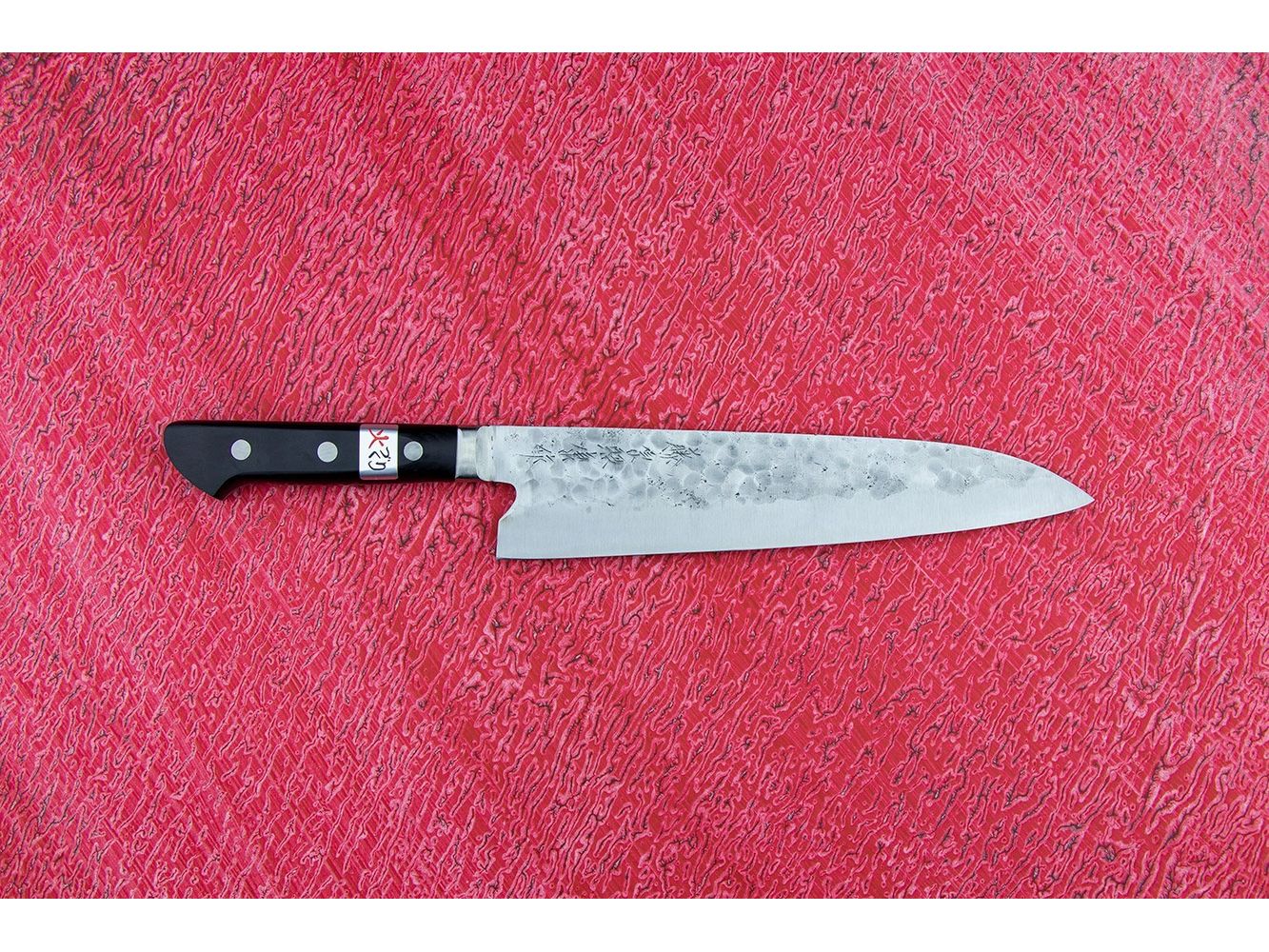
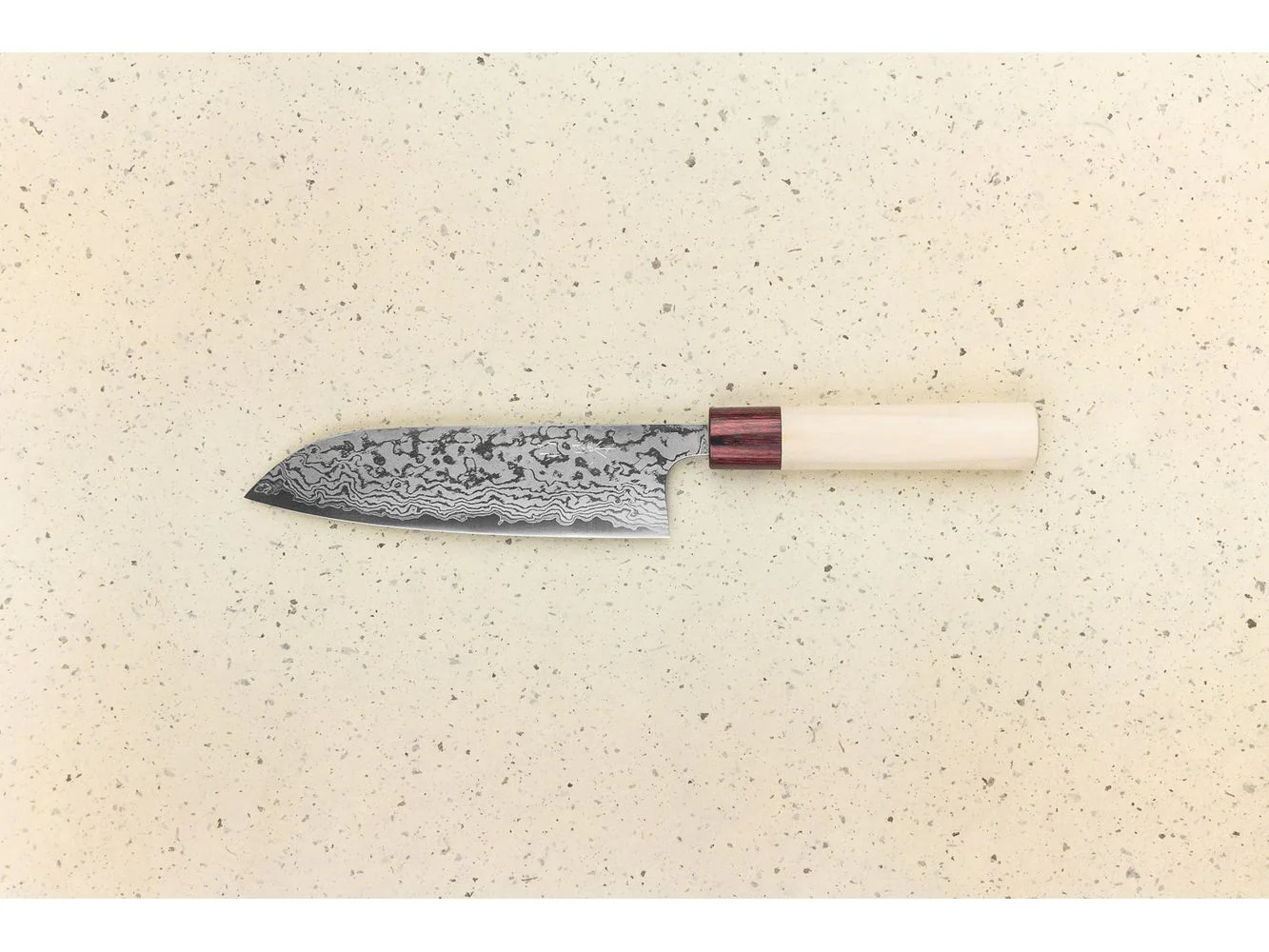
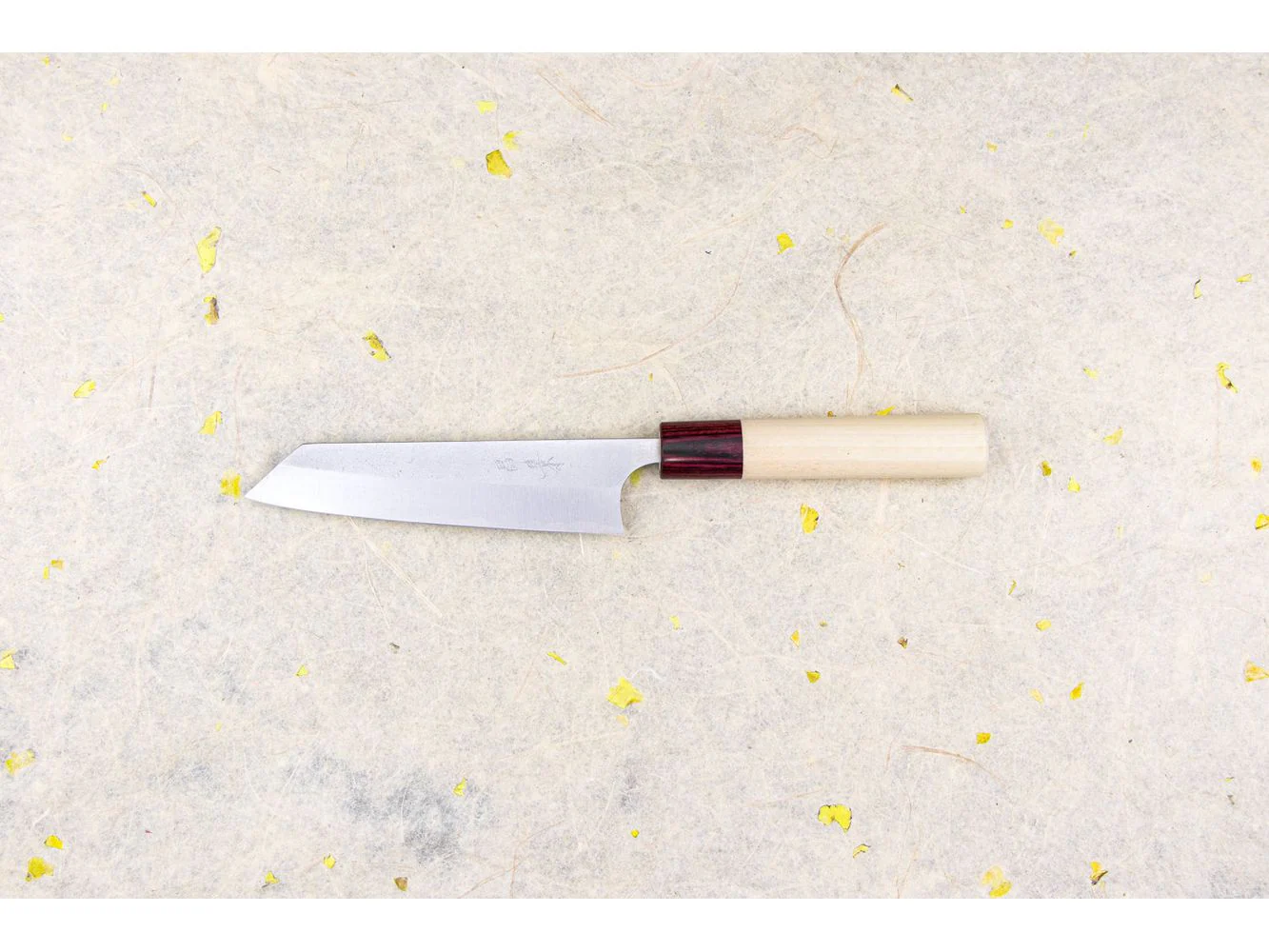
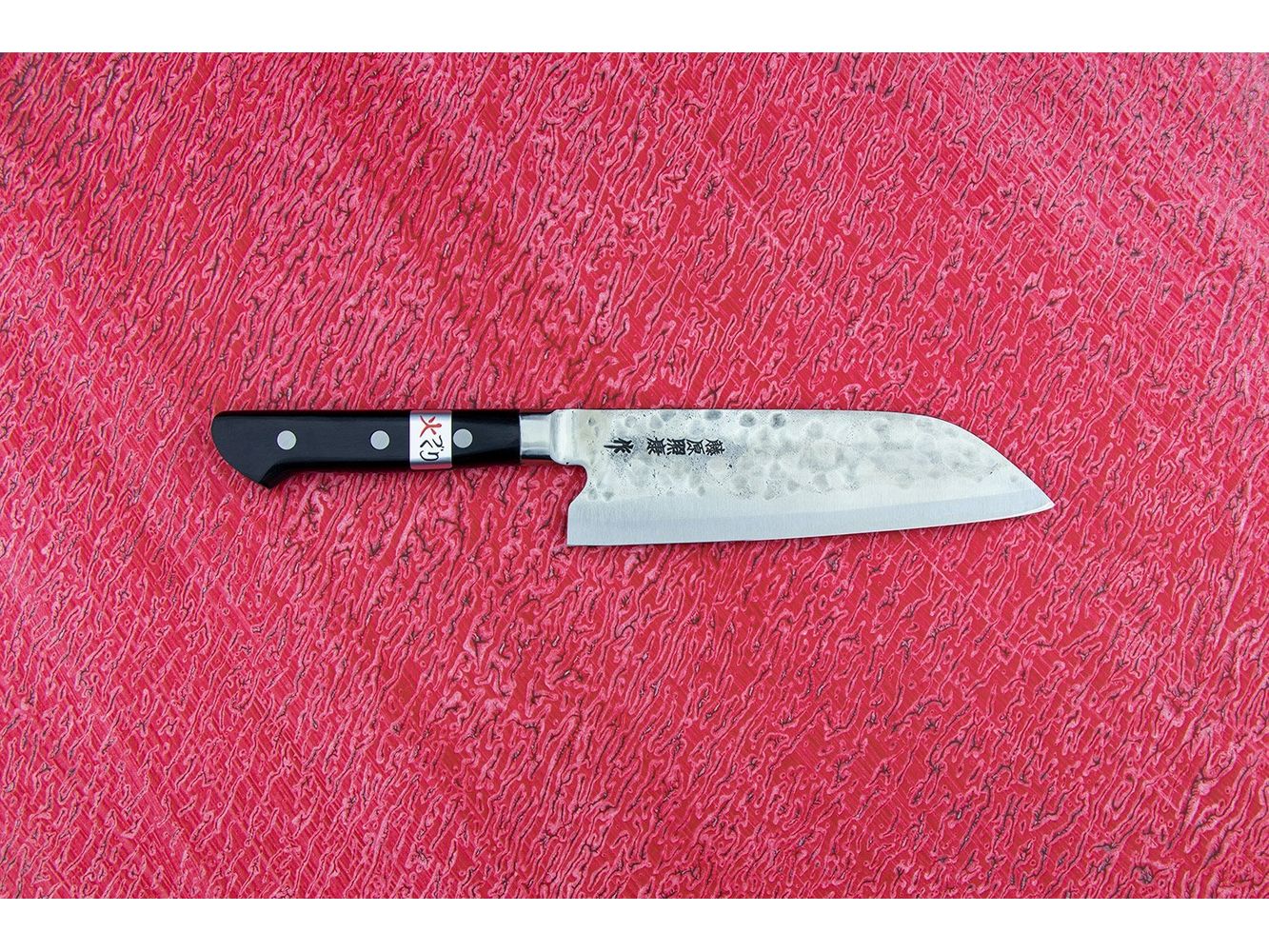
About the Shape - This is also a multi-purpose knife, but with a slight vegetable bias. Santoku means 'Three Virtues' or 'To solve Three Problems'. The virtues or problems are slicing, dicing and mincing. Santoku is usually found in 160mm - 190mm lengths. These are more and more popular in Western kitchens due to the unique shape and smaller easy to handle size.
About the Tsukasa Hinoura River Jump - Tsukasa Hinoura represents the third generation of his family‘s forging tradition. As a young craftsman, his role models were Nagashima and Shigeyoshi Iwasaki of Sanjo. They enjoy an excellent reputation in Echigo and have done a great deal to advance the knife maker’s art in Sanjo. Tsukasa Hinoura, born in 1956, works in Sanjo in Niigata Prefecture, has been practicing his trade for 33 years. His blades are known for a refined and long lived edge.
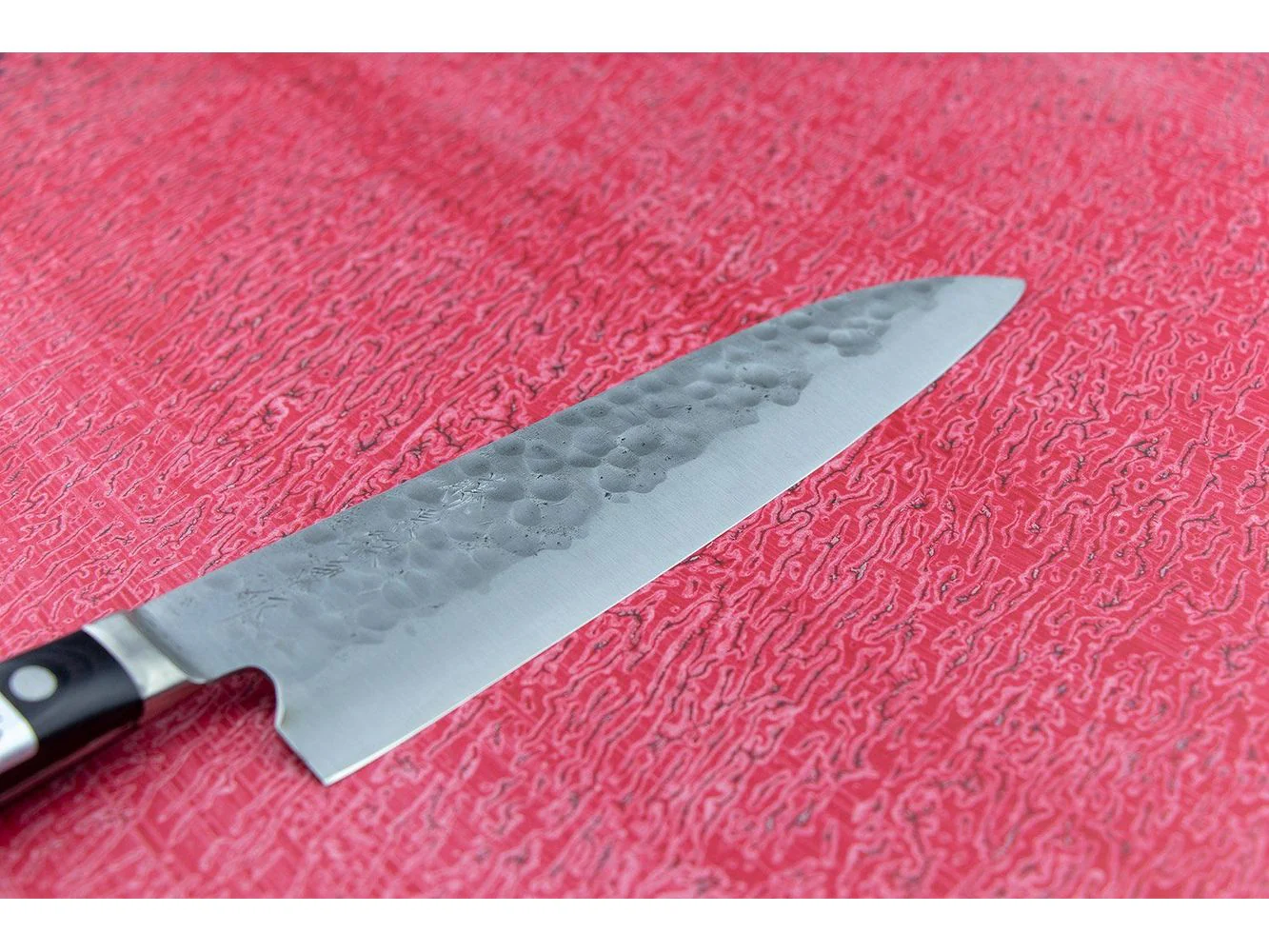
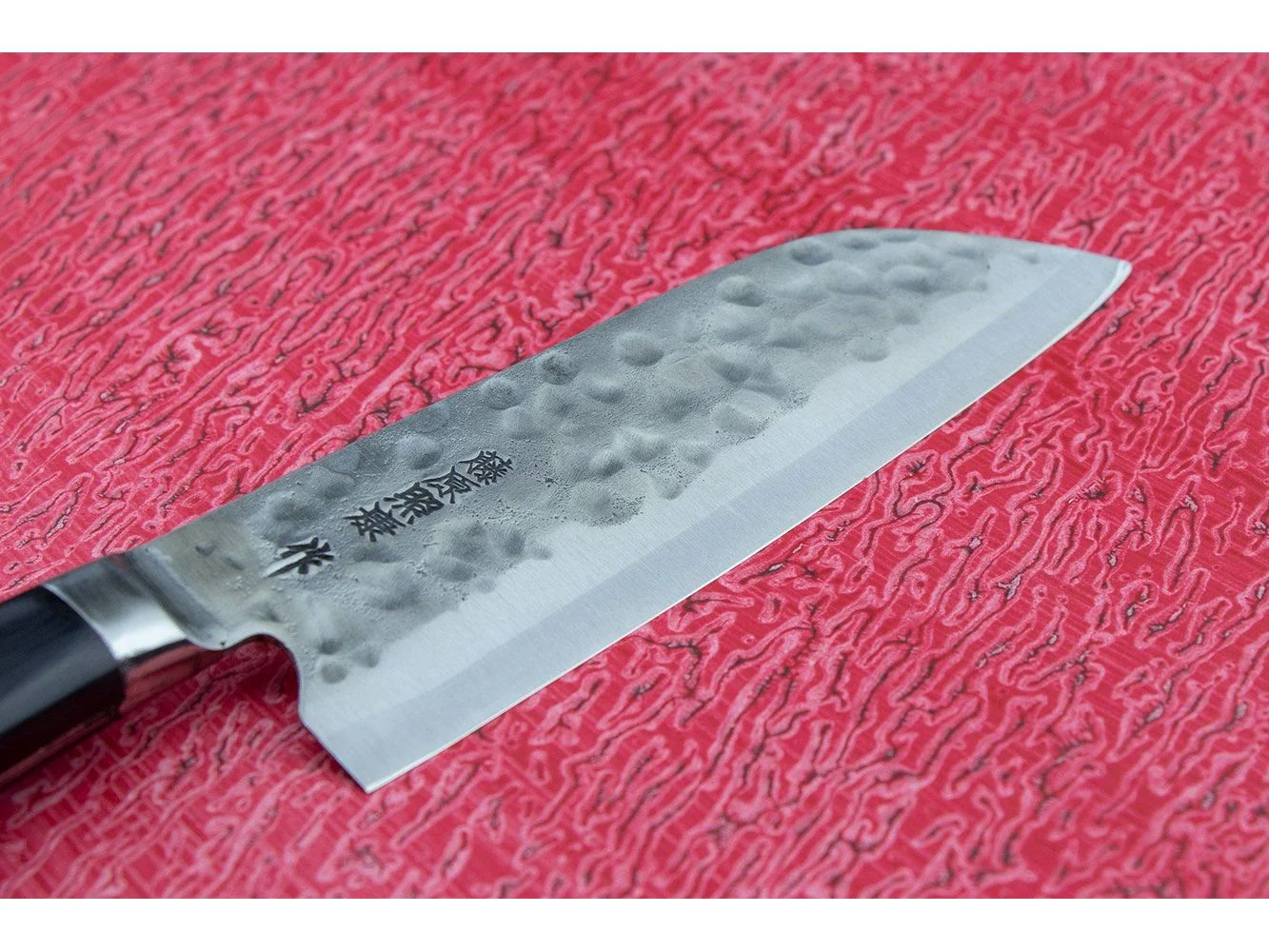
Hinoura san consciously rejects the prefabricated Damascus steel blanks, referred to as “sekisouk-ko”, commonly used in Japan. Many of the country’s knife makers and industrial manufactures that produce Damascus blades use this “instant recipe”, but neglect to make this clear to customers.
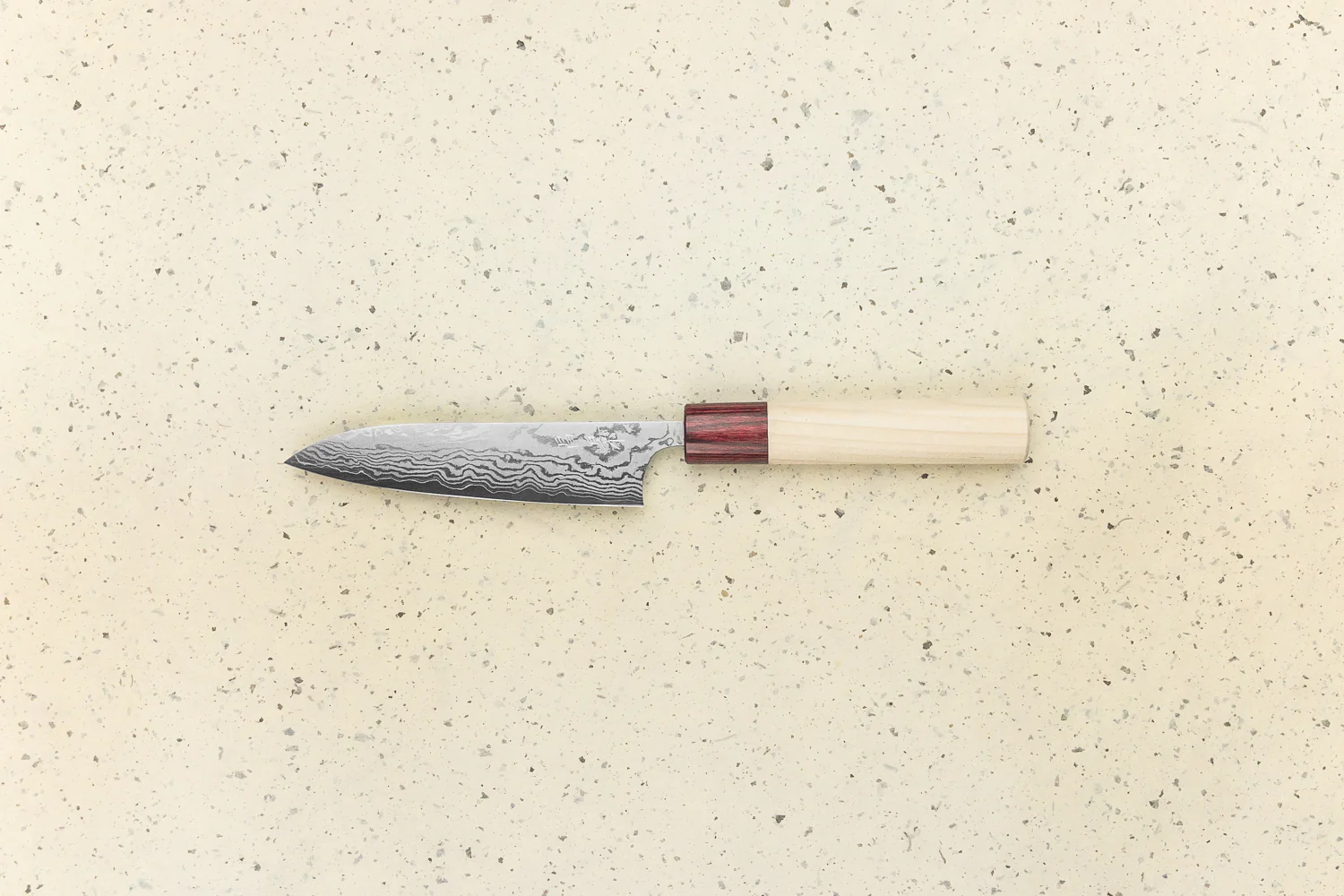
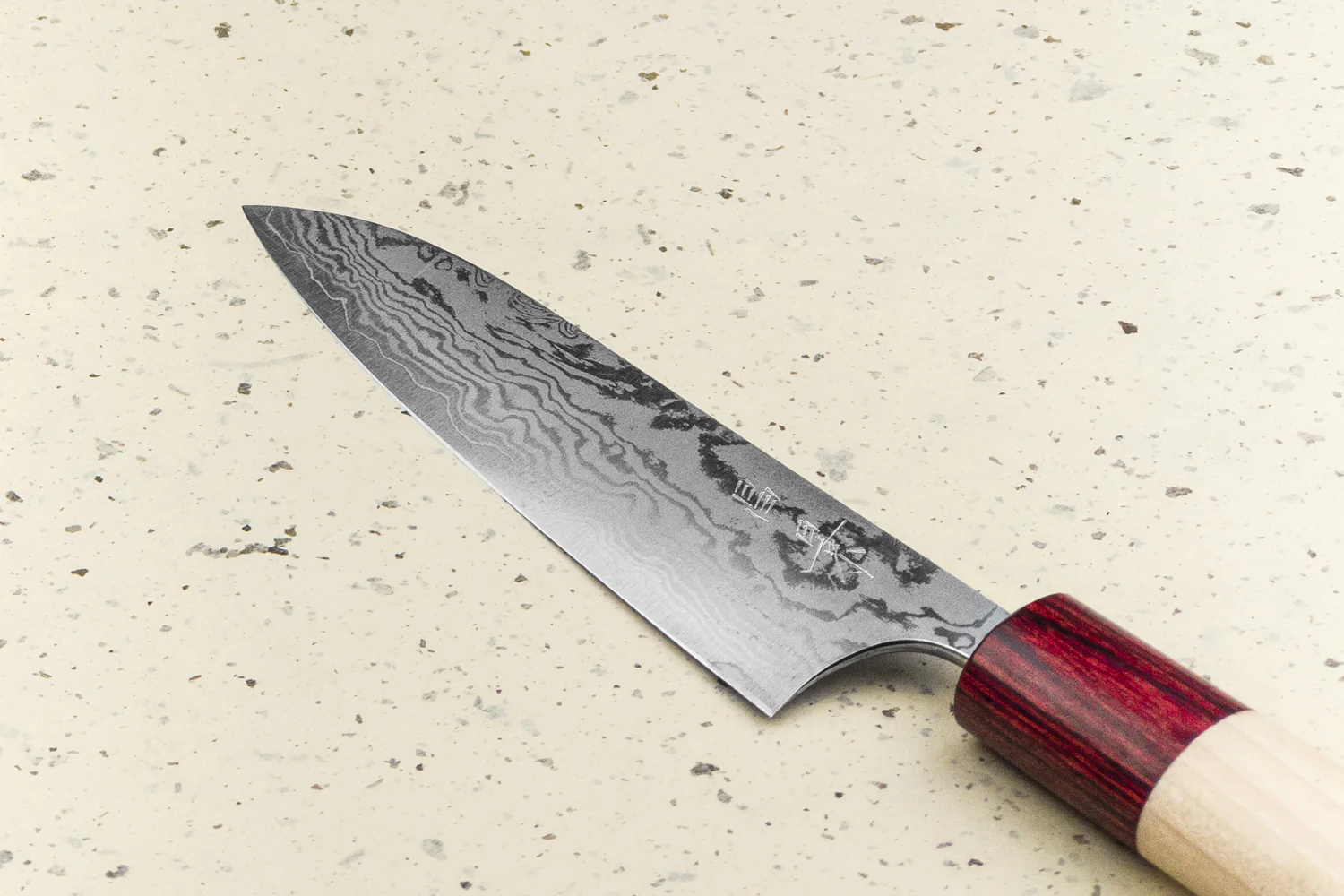
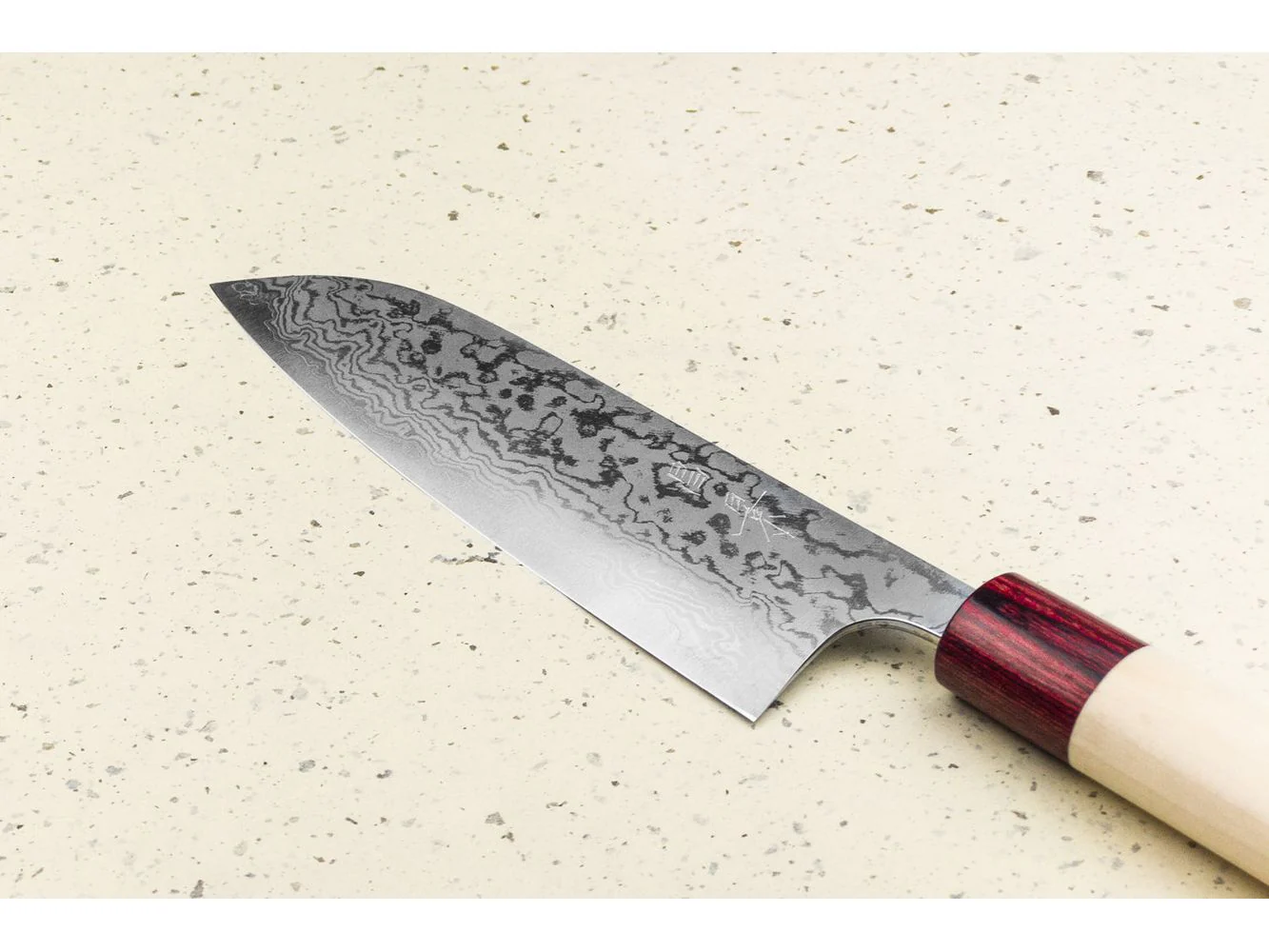
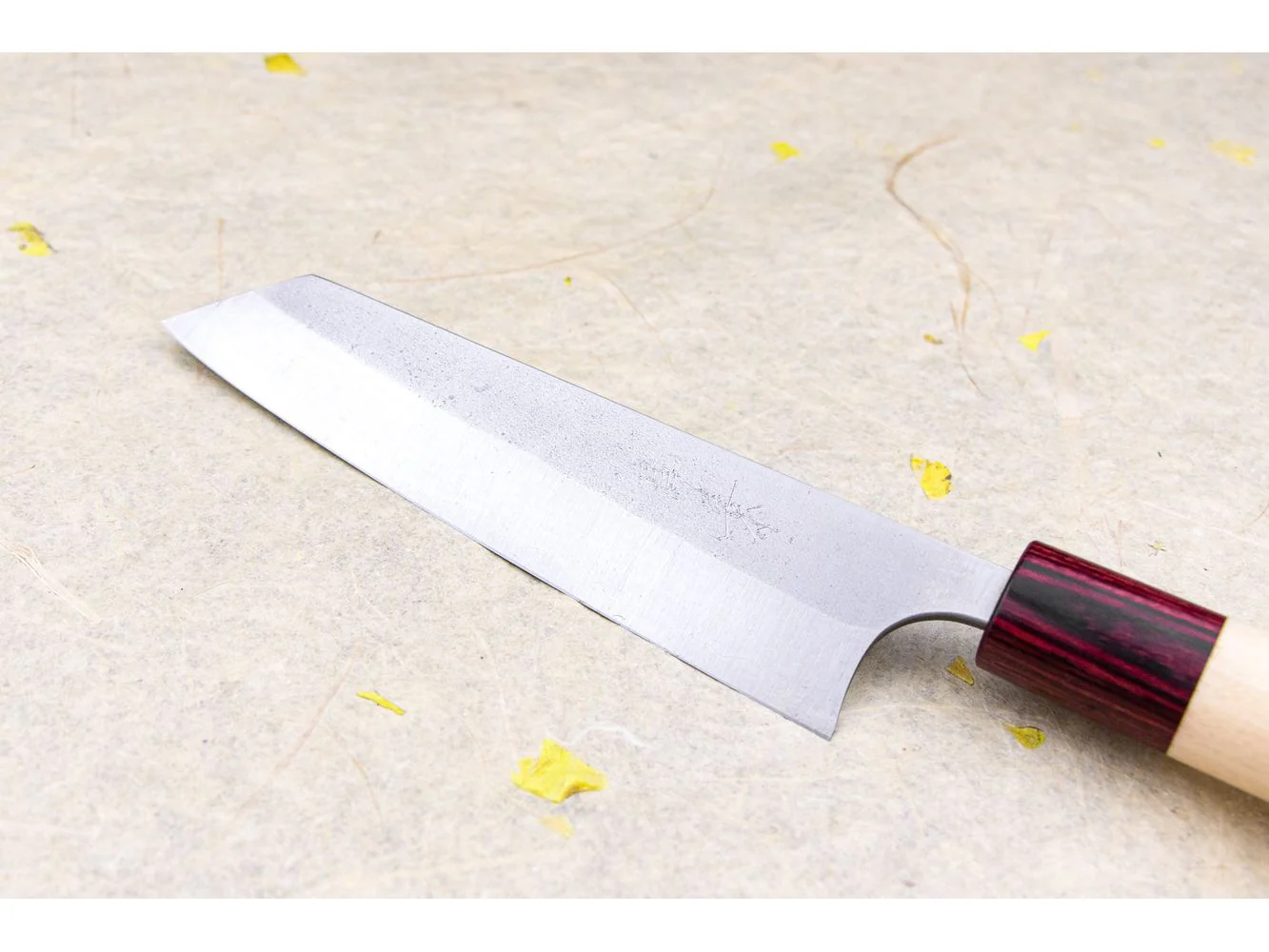
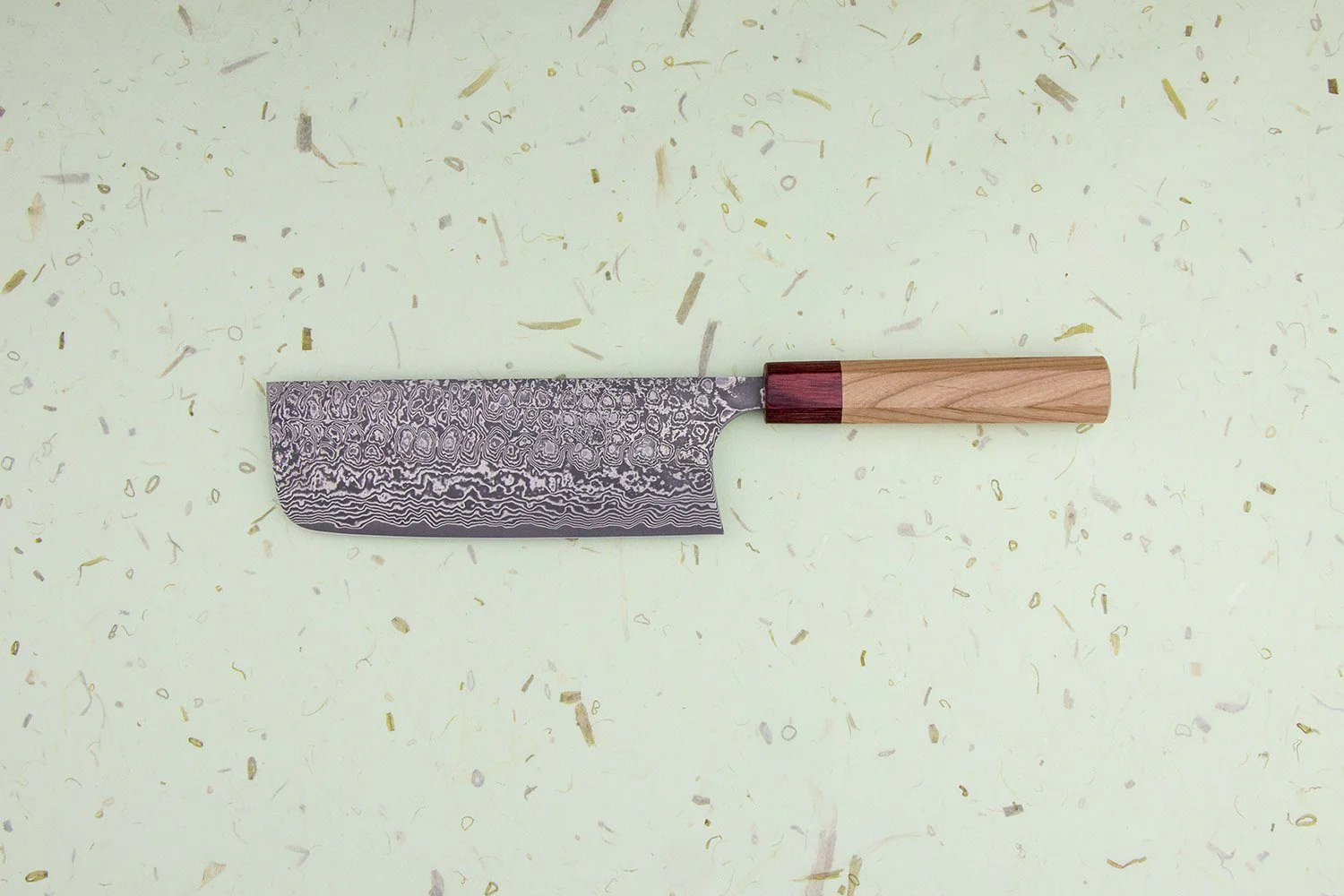
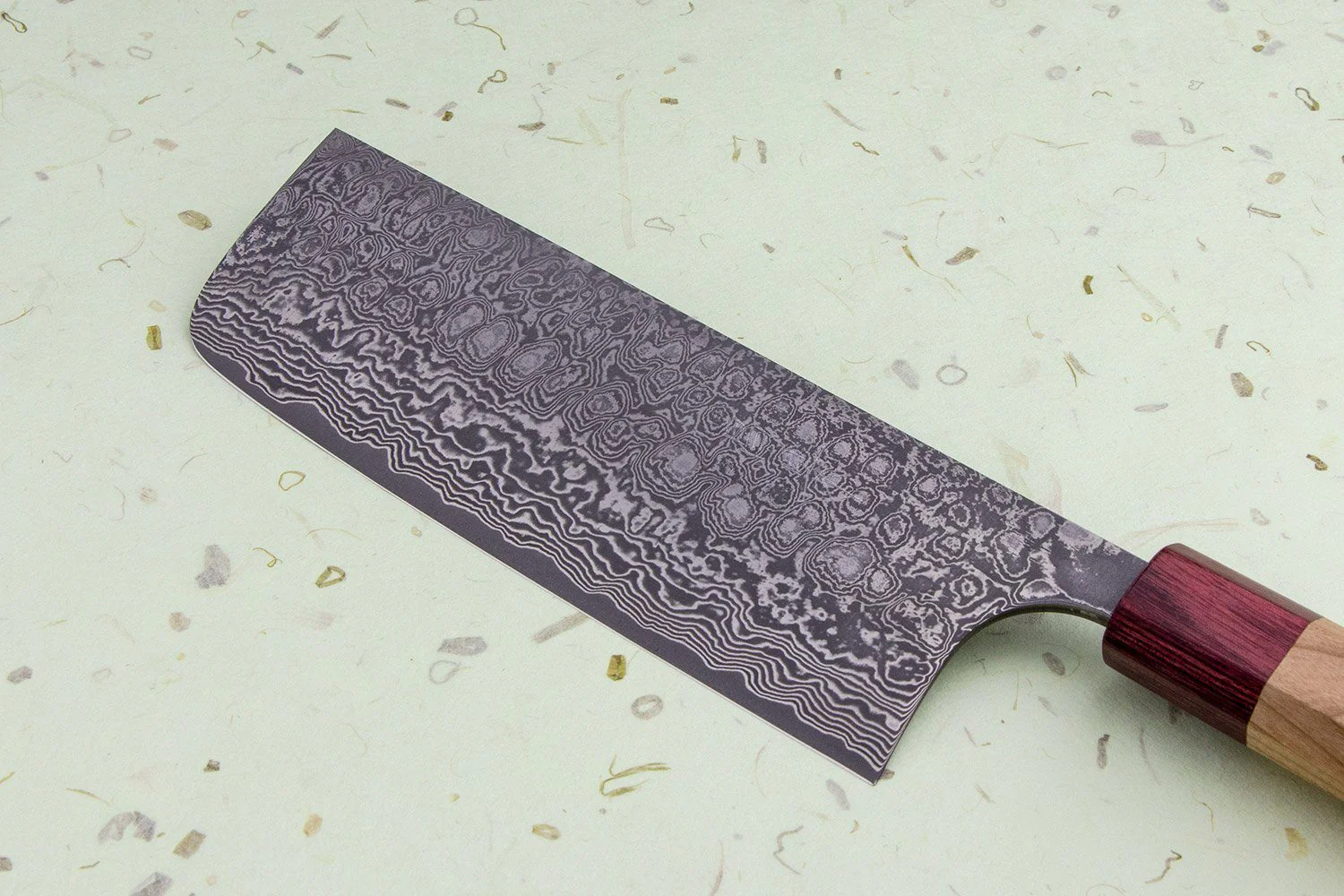
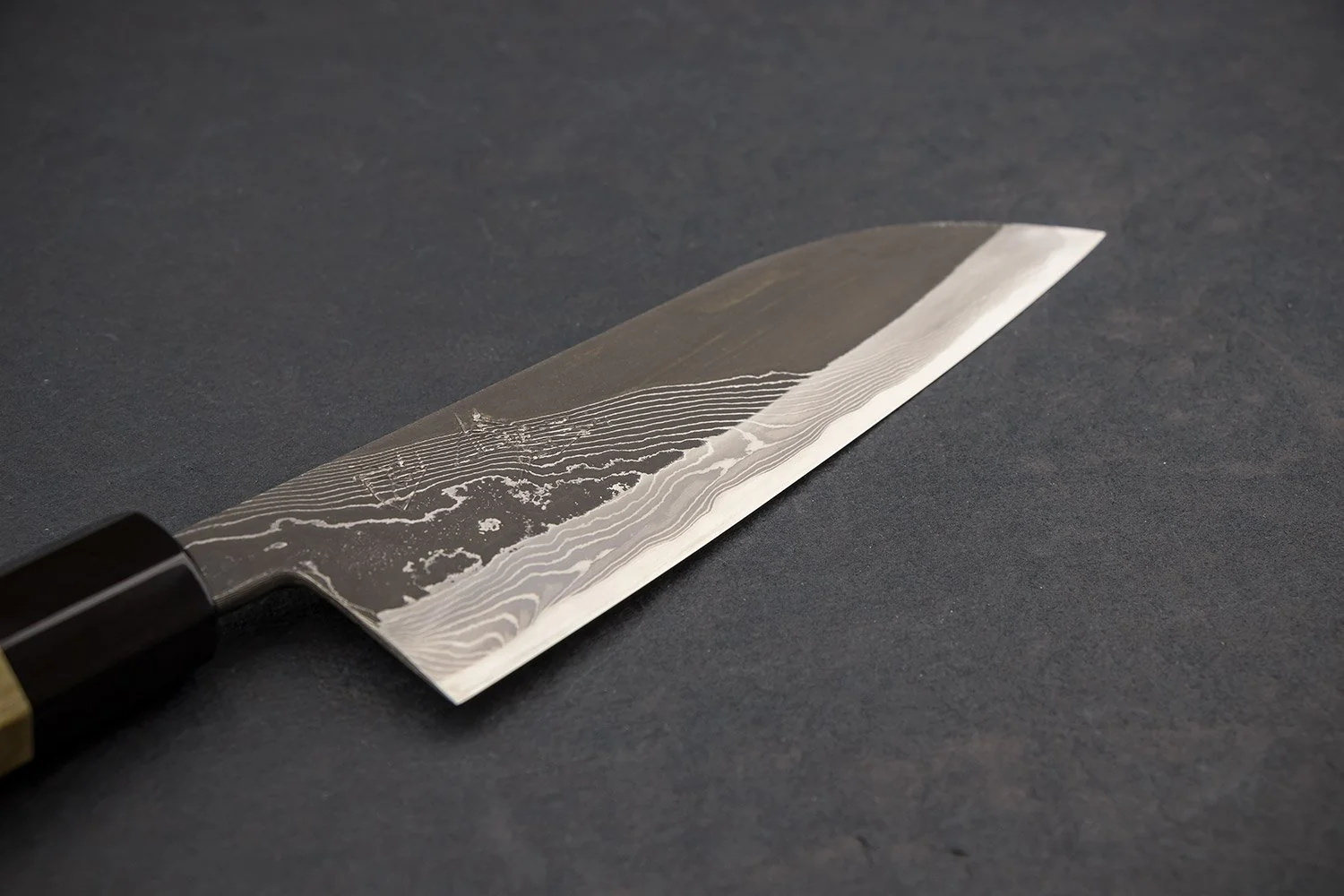
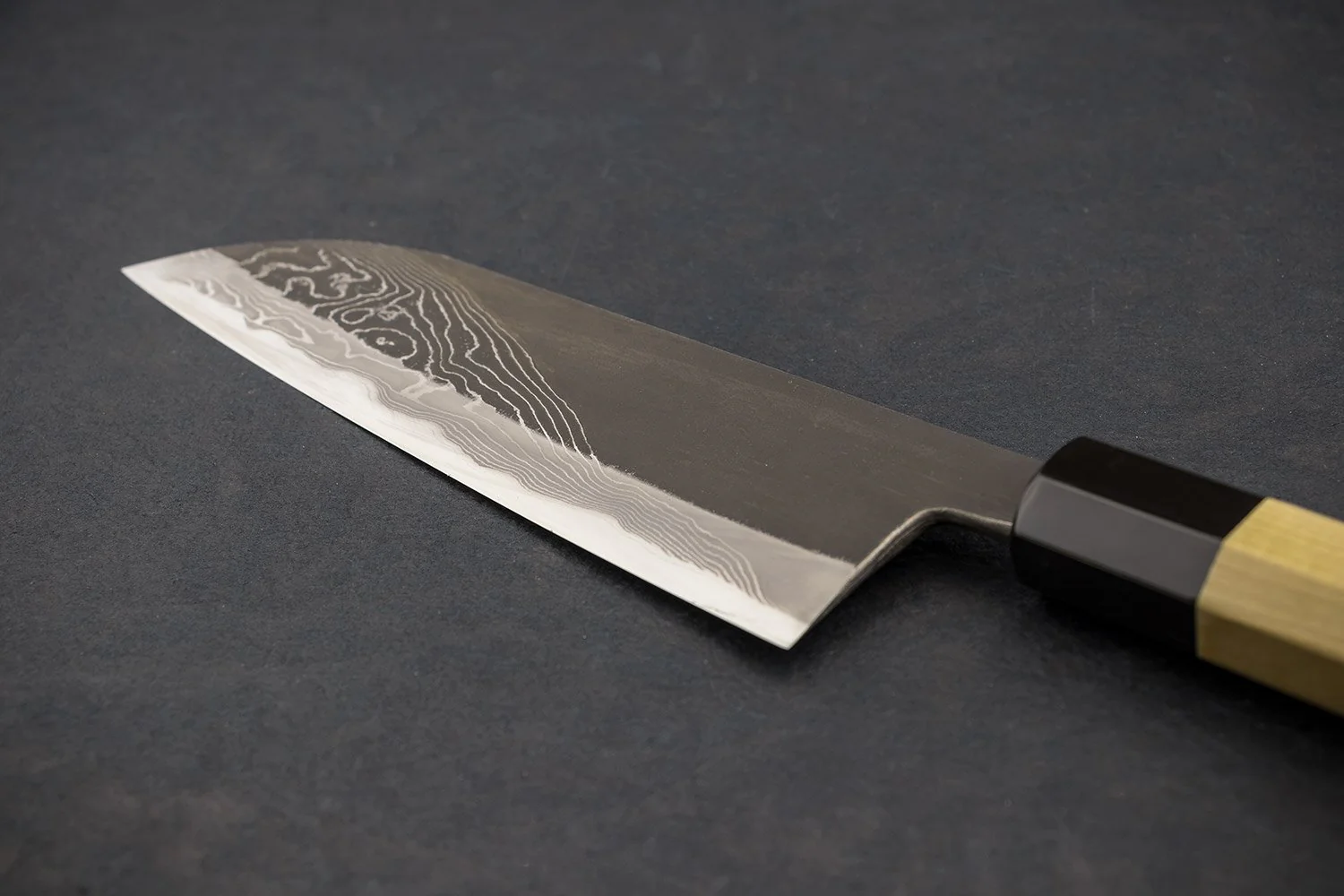
Each knife in the series “River Jump” is a one of a kind example of the Japanese knife making art. Hinoura san is among the world’s few knife makers who are skilled in the time honoured Damascus techniques involving torsion. With river jump, he has taken the method even further. By means of torsion, he combines a multi layered Damascus bar with solid mono steel bar. The result is a blade of extraordinary beauty, in which the river like flow of the Damascus surface alternates with the peace of a perfectly even surface -animated and static elements in perfect harmony.
| Knife Shape | Santoku |
|---|---|
| Blade Length | 165mm |
| Steel Type | #2 Shirogami (White carbon) Steel |
| Rockwell Hardness | 62:64 |
| Handle Shape | Octagon |
| Handle Material | Magnolia wood and water buffalo horn collar |
| Blacksmith | Tsukasa Hinoura |
| Knife Line | Hinoura River |
Original: $1,342.38
-65%$1,342.38
$469.83Product Information
Product Information
Shipping & Returns
Shipping & Returns
Description
About the Shape - This is also a multi-purpose knife, but with a slight vegetable bias. Santoku means 'Three Virtues' or 'To solve Three Problems'. The virtues or problems are slicing, dicing and mincing. Santoku is usually found in 160mm - 190mm lengths. These are more and more popular in Western kitchens due to the unique shape and smaller easy to handle size.
About the Tsukasa Hinoura River Jump - Tsukasa Hinoura represents the third generation of his family‘s forging tradition. As a young craftsman, his role models were Nagashima and Shigeyoshi Iwasaki of Sanjo. They enjoy an excellent reputation in Echigo and have done a great deal to advance the knife maker’s art in Sanjo. Tsukasa Hinoura, born in 1956, works in Sanjo in Niigata Prefecture, has been practicing his trade for 33 years. His blades are known for a refined and long lived edge.
Hinoura san consciously rejects the prefabricated Damascus steel blanks, referred to as “sekisouk-ko”, commonly used in Japan. Many of the country’s knife makers and industrial manufactures that produce Damascus blades use this “instant recipe”, but neglect to make this clear to customers.
Each knife in the series “River Jump” is a one of a kind example of the Japanese knife making art. Hinoura san is among the world’s few knife makers who are skilled in the time honoured Damascus techniques involving torsion. With river jump, he has taken the method even further. By means of torsion, he combines a multi layered Damascus bar with solid mono steel bar. The result is a blade of extraordinary beauty, in which the river like flow of the Damascus surface alternates with the peace of a perfectly even surface -animated and static elements in perfect harmony.
| Knife Shape | Santoku |
|---|---|
| Blade Length | 165mm |
| Steel Type | #2 Shirogami (White carbon) Steel |
| Rockwell Hardness | 62:64 |
| Handle Shape | Octagon |
| Handle Material | Magnolia wood and water buffalo horn collar |
| Blacksmith | Tsukasa Hinoura |
| Knife Line | Hinoura River |