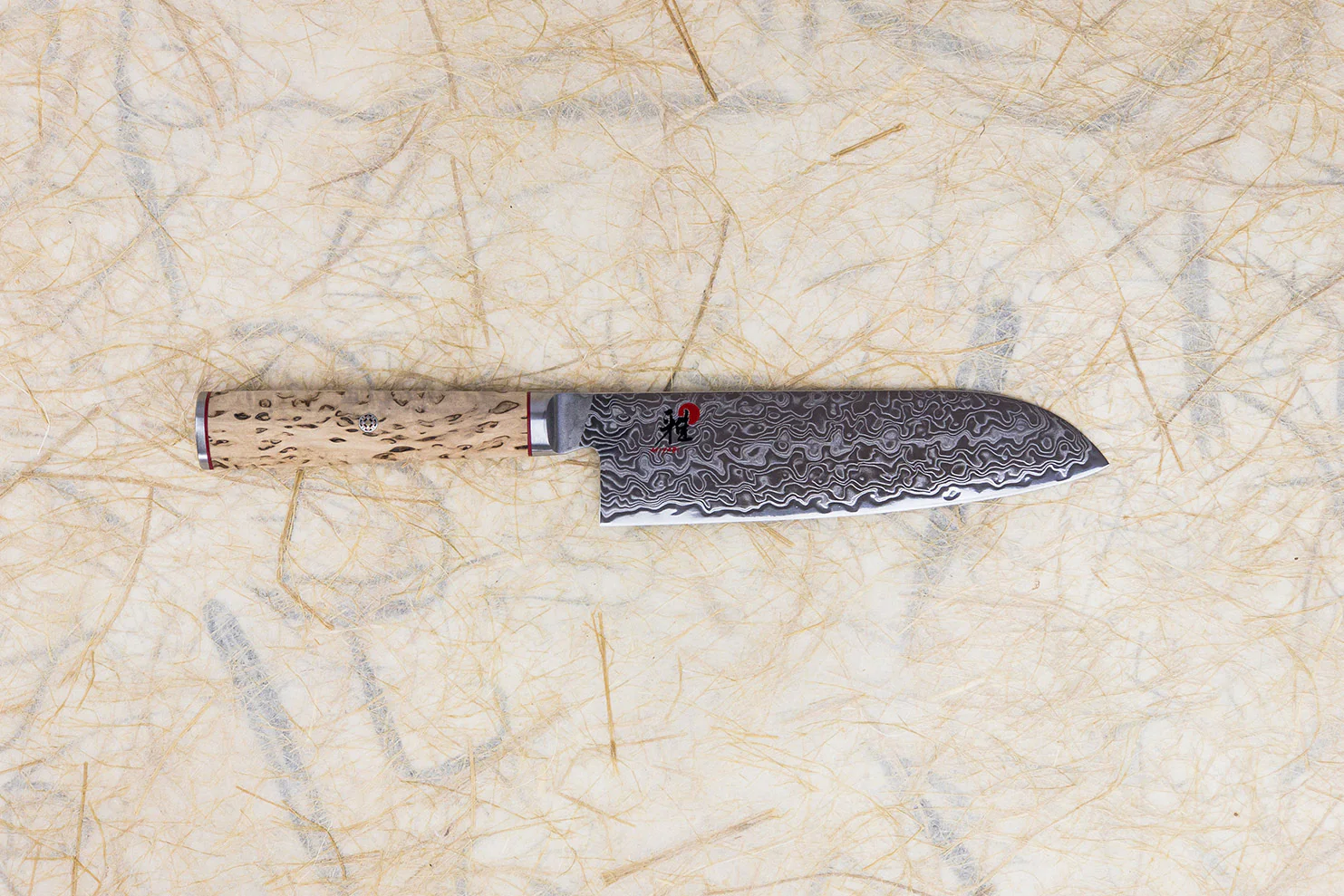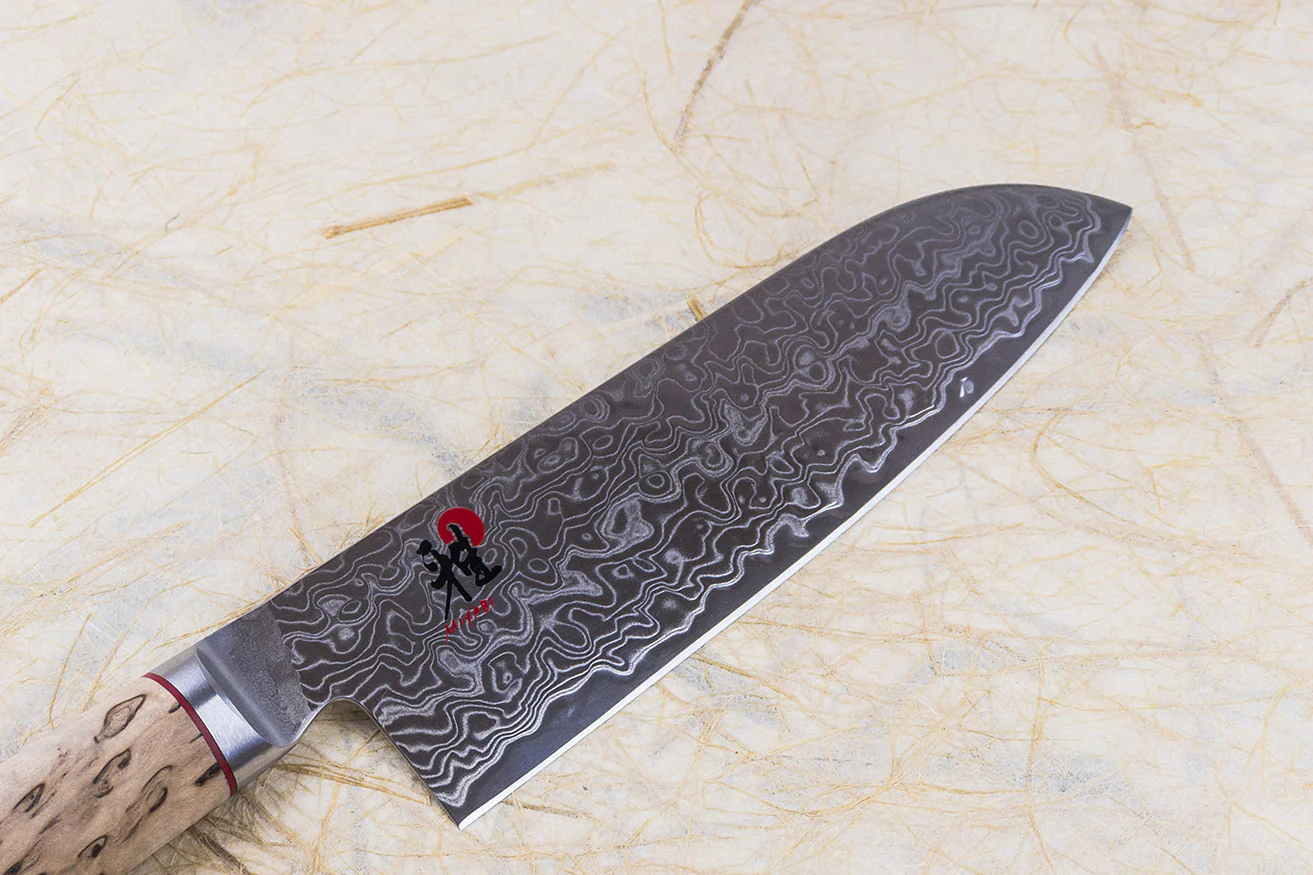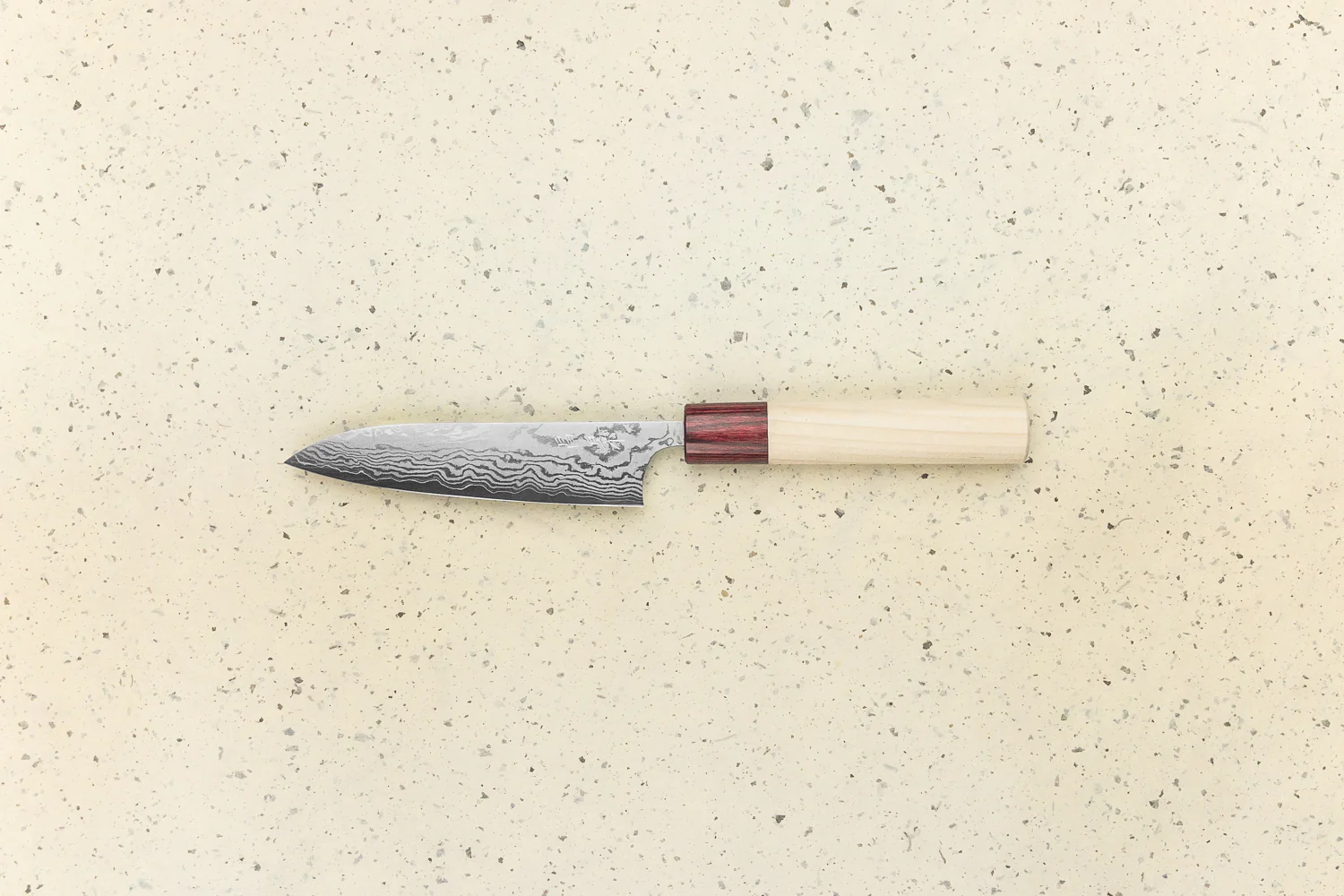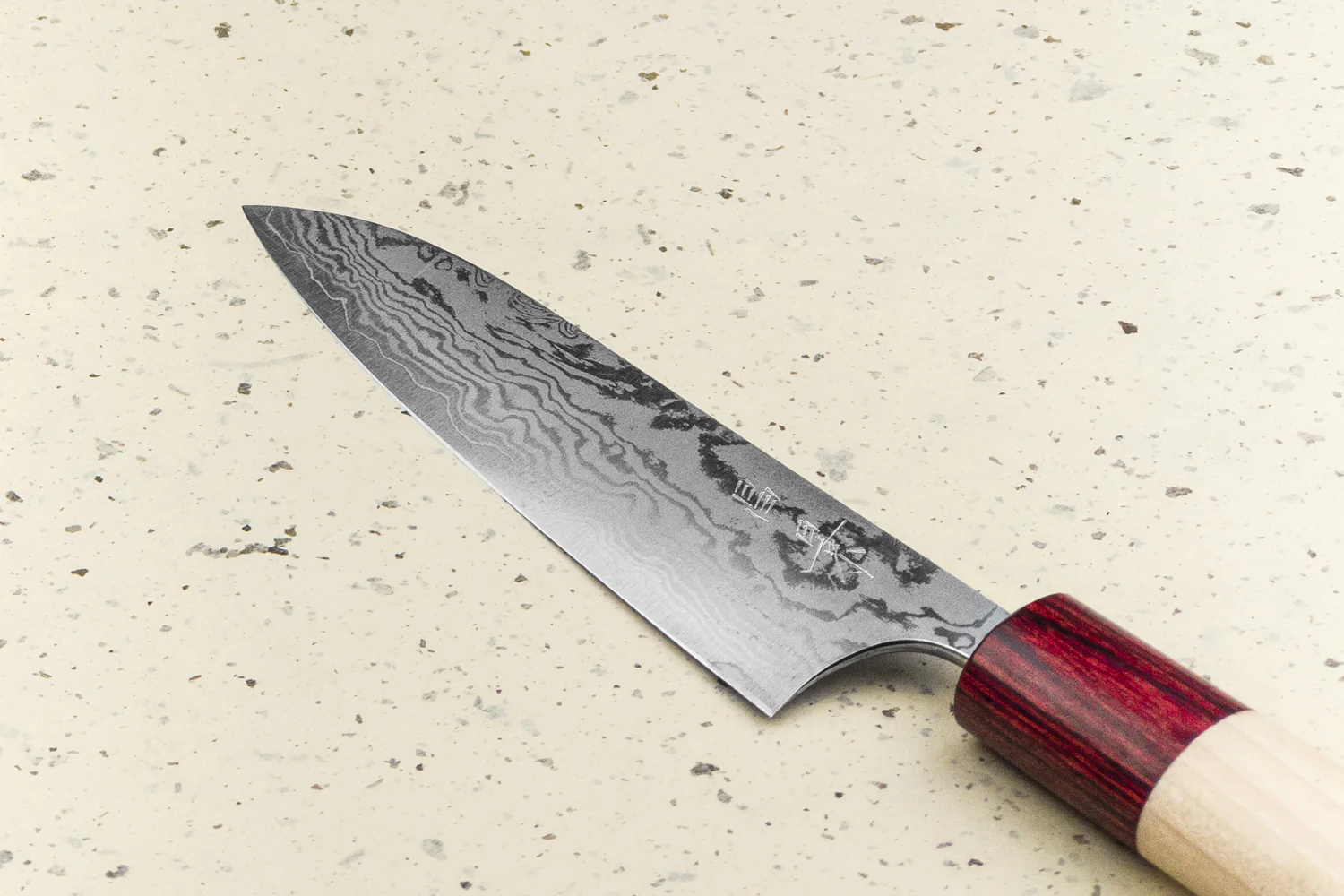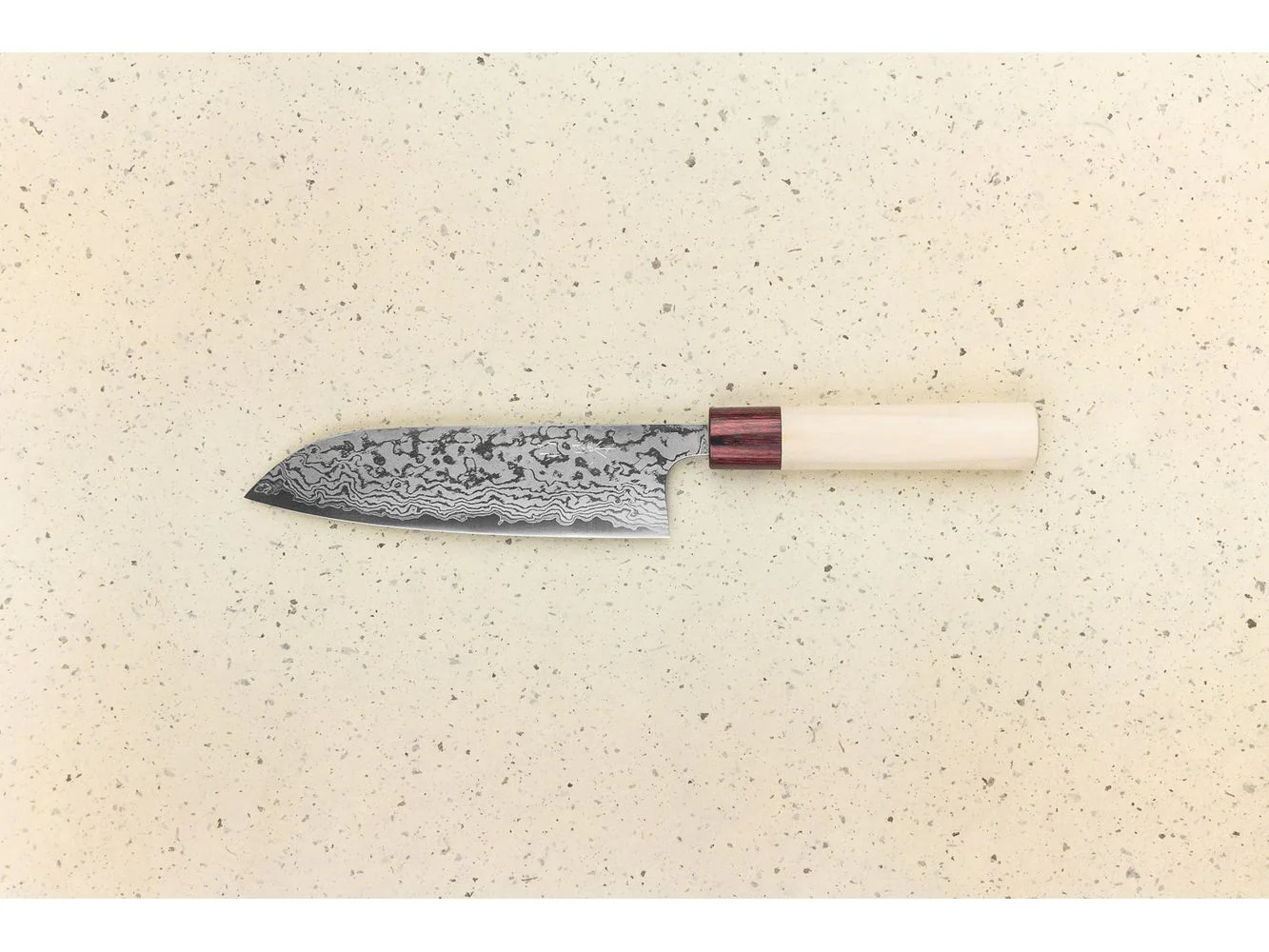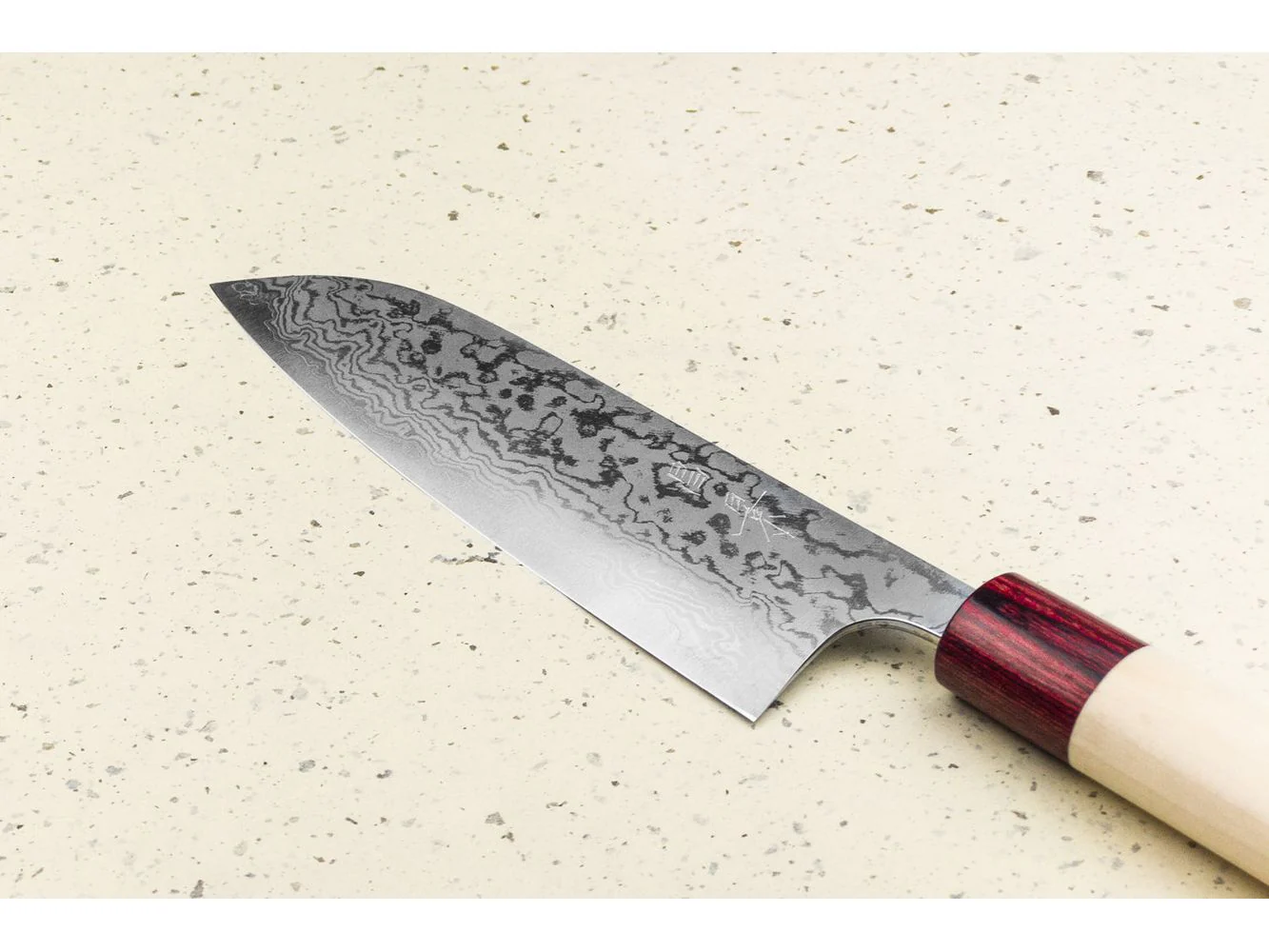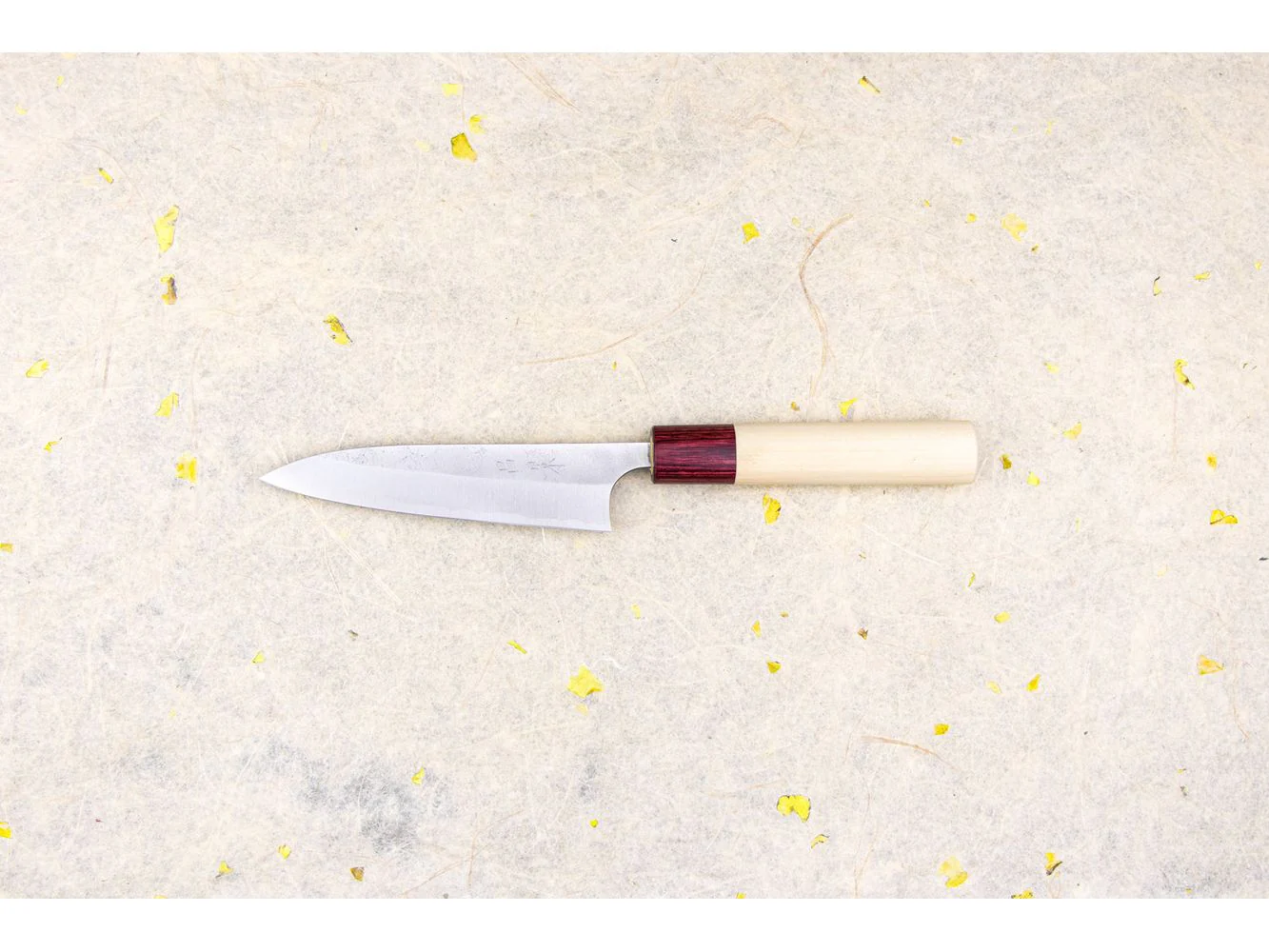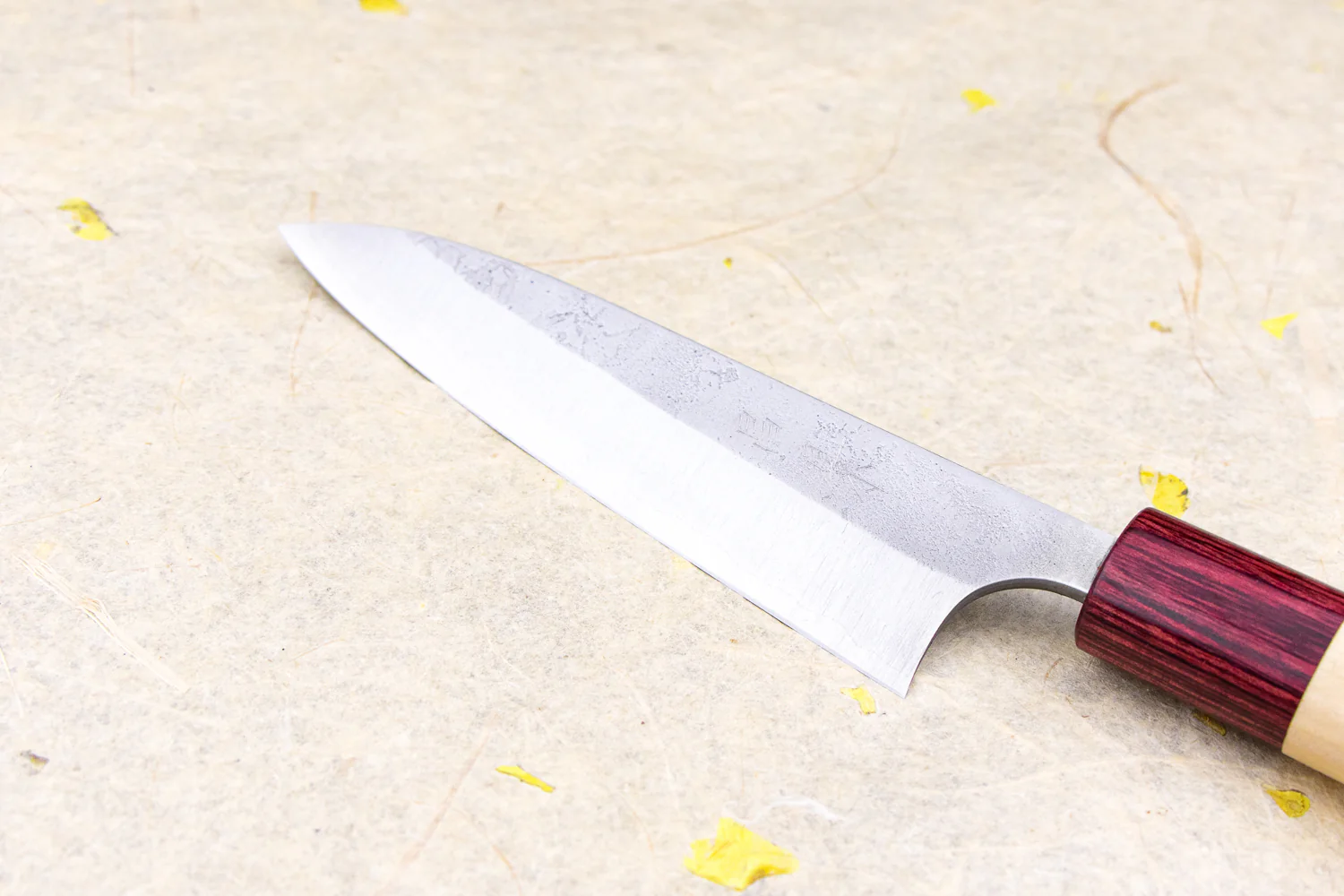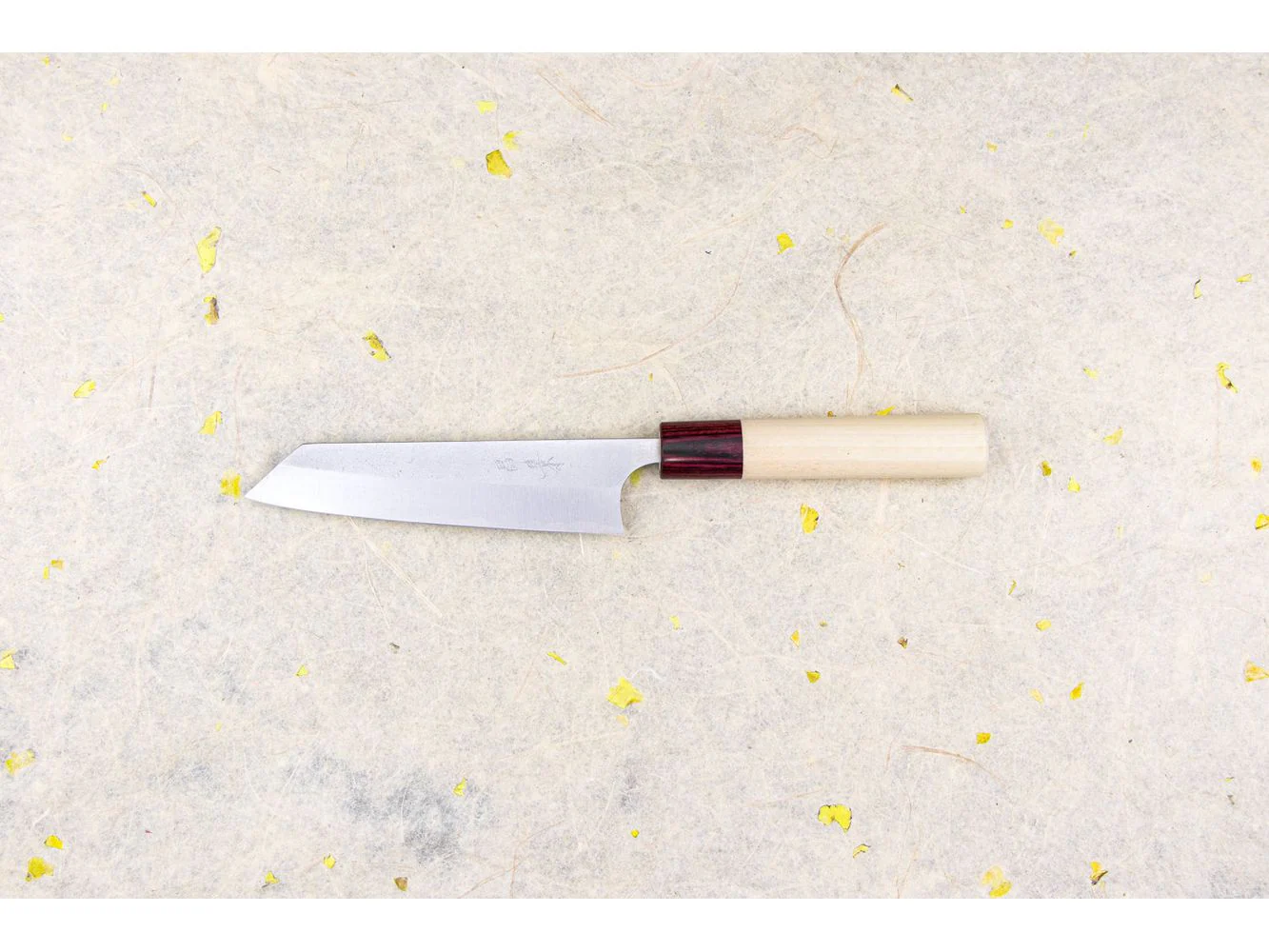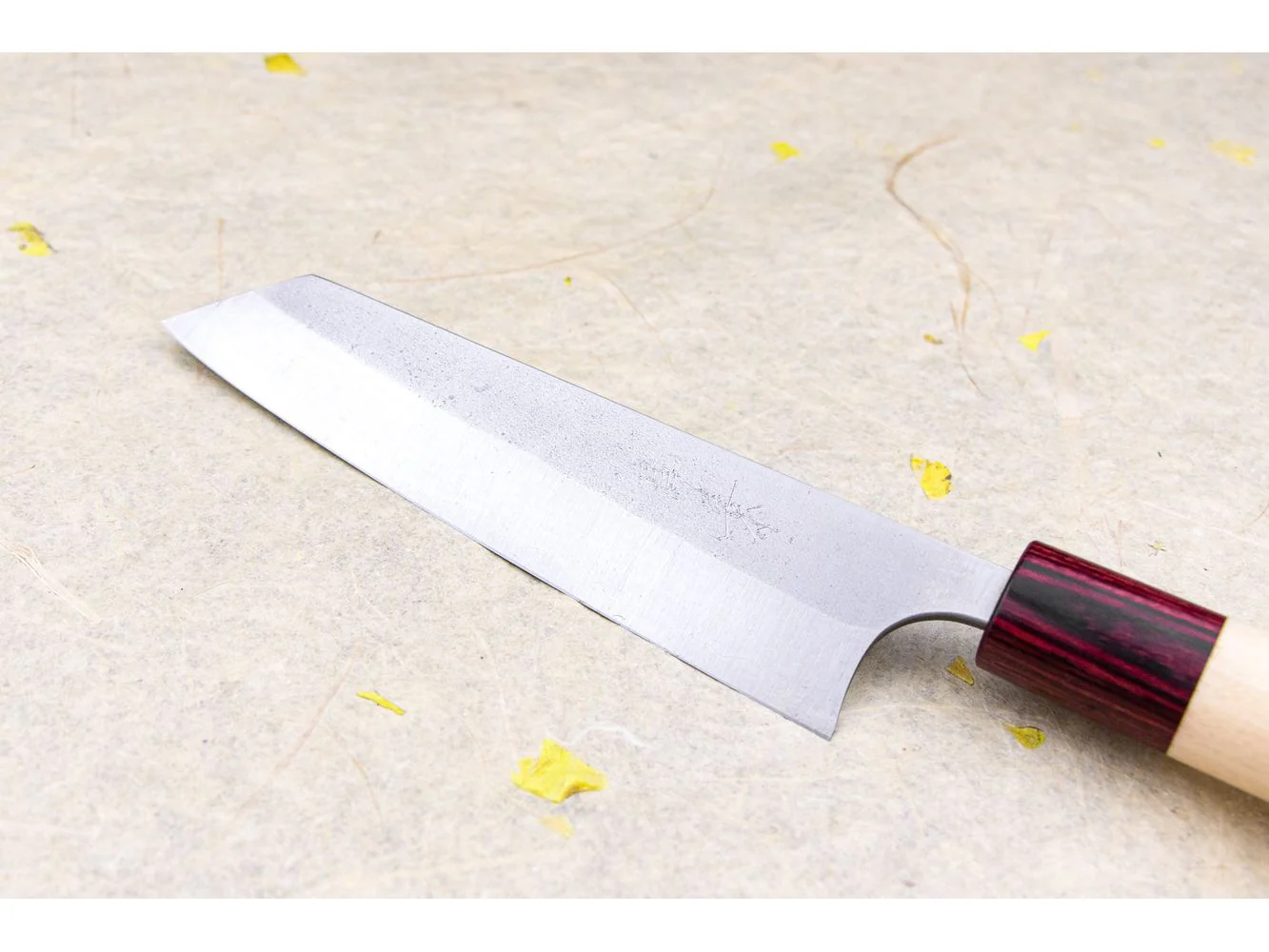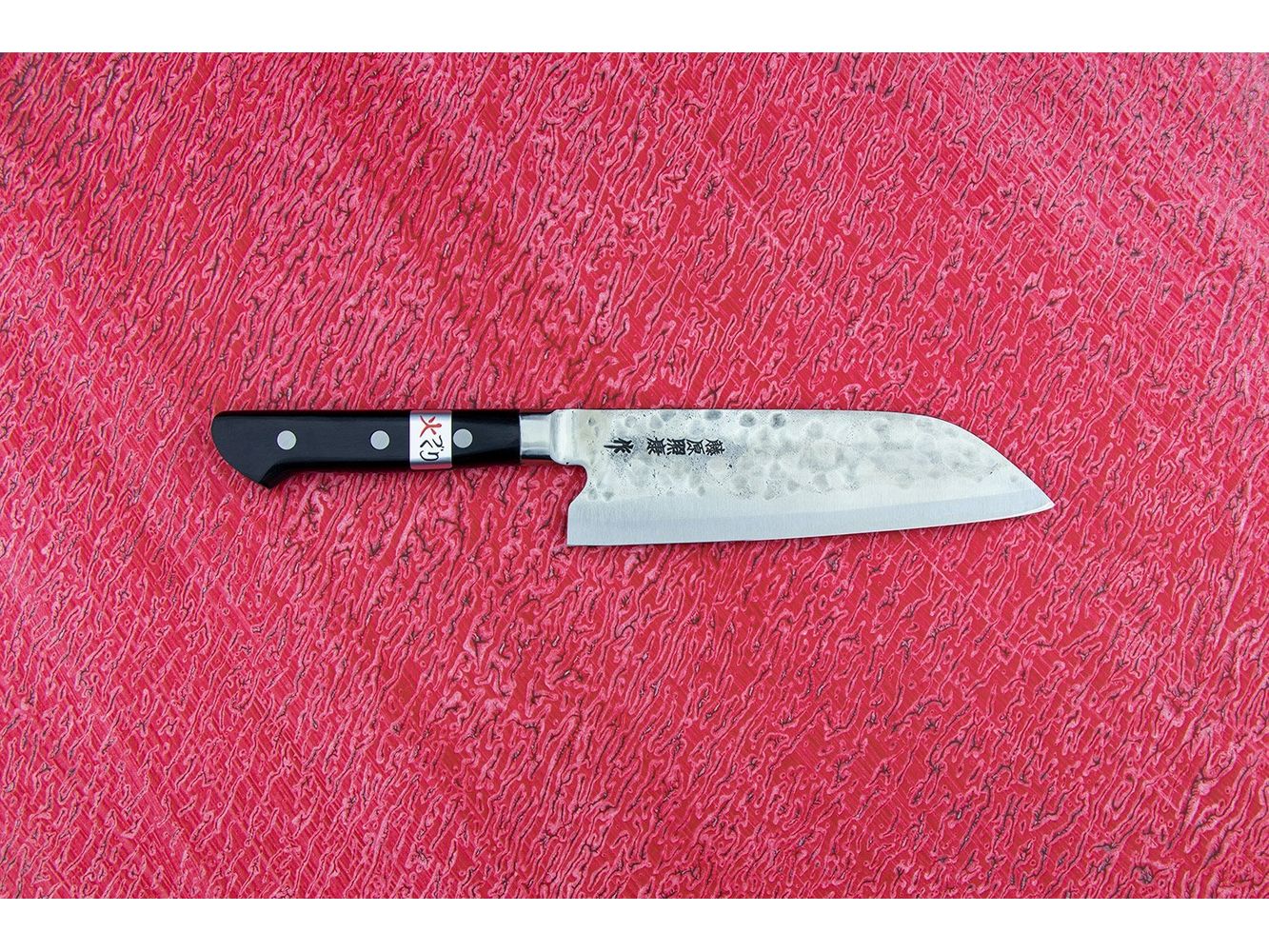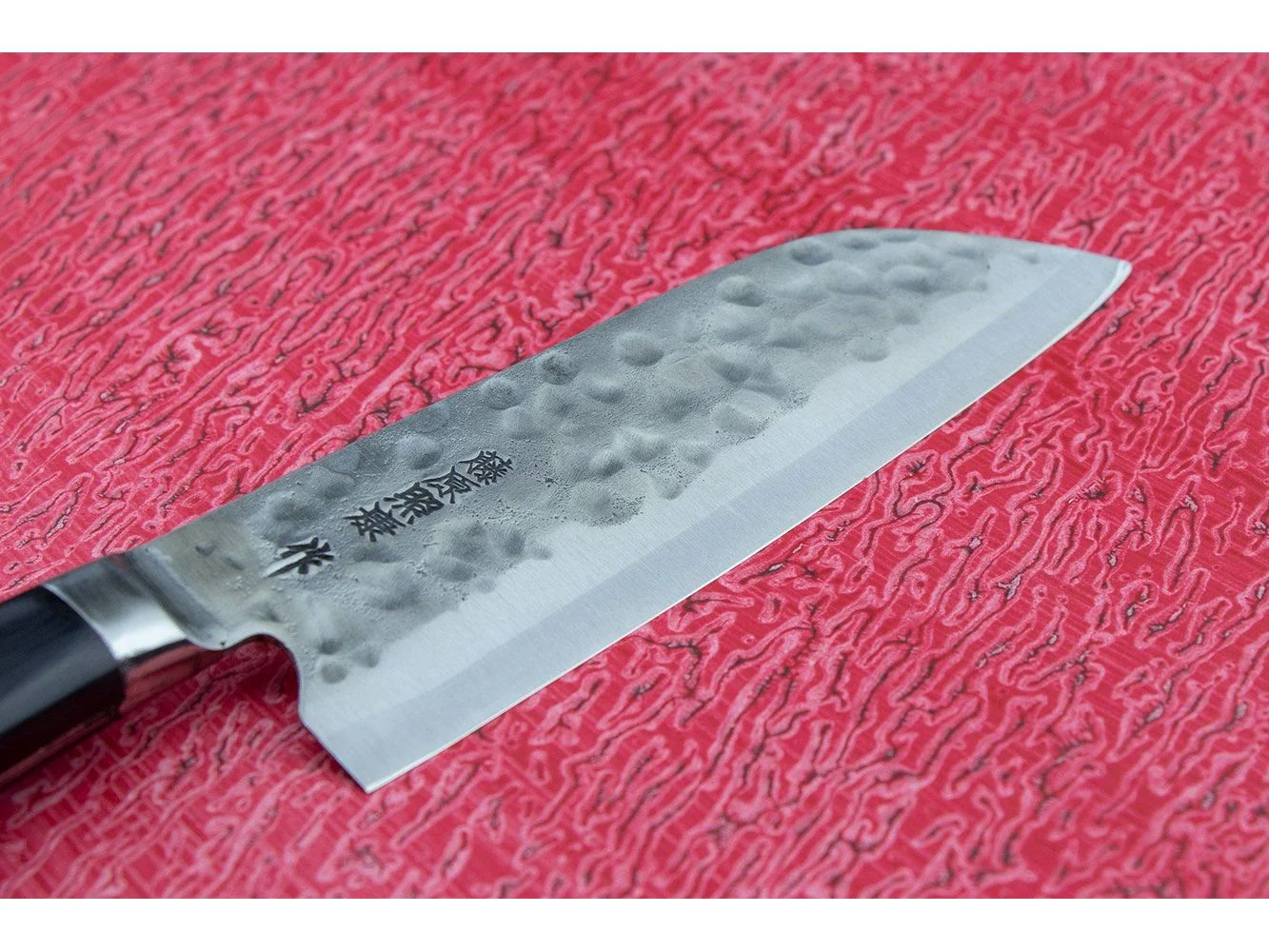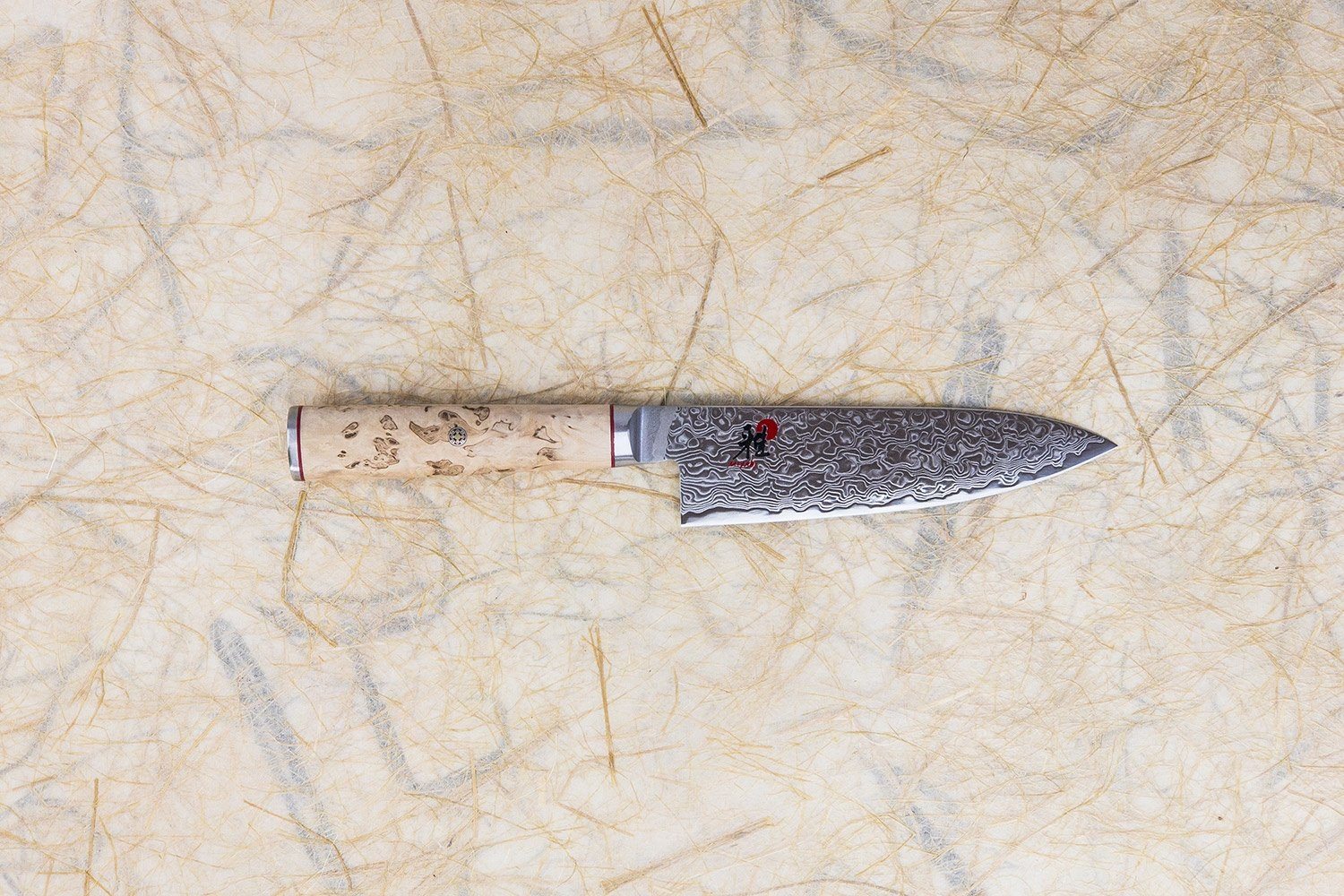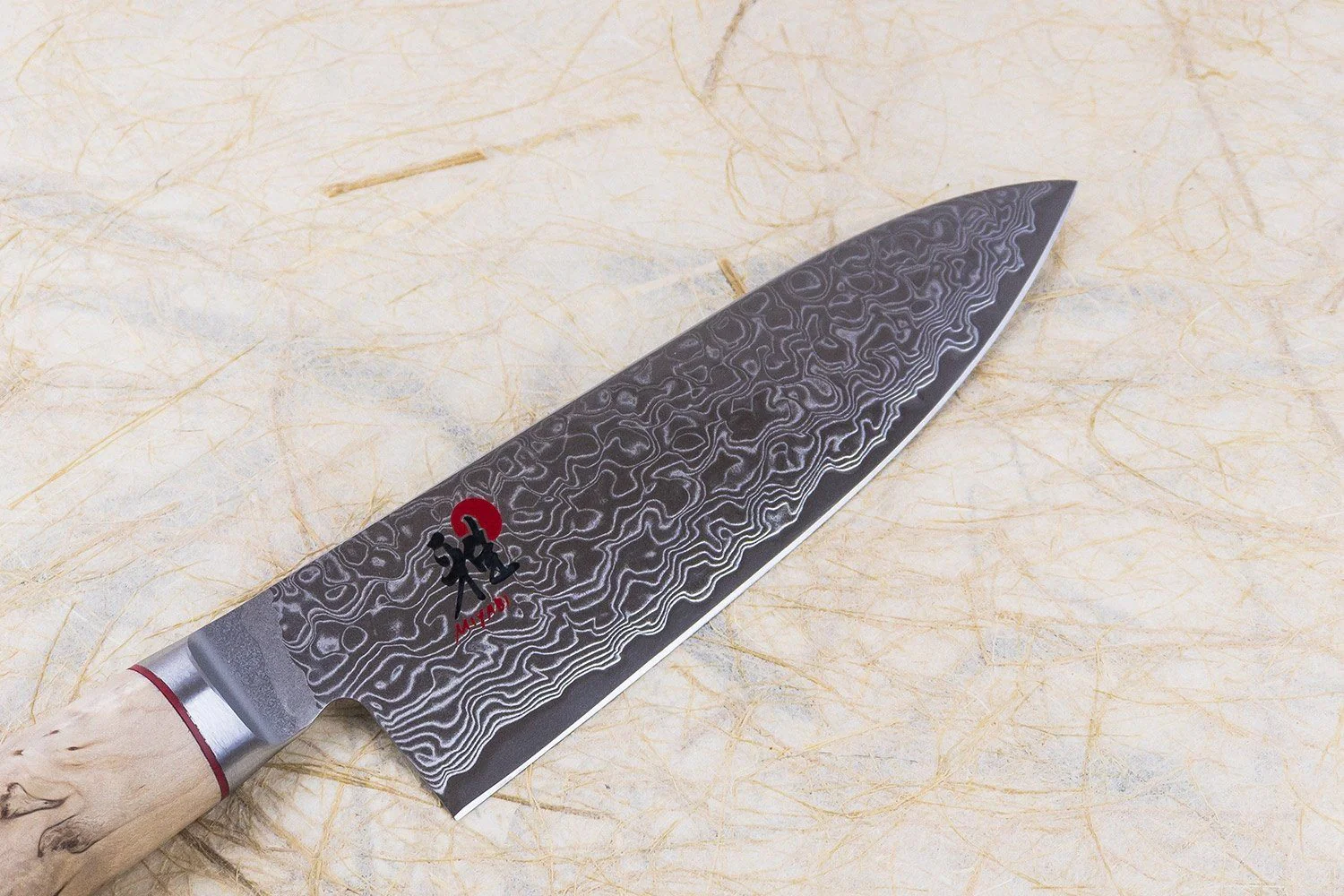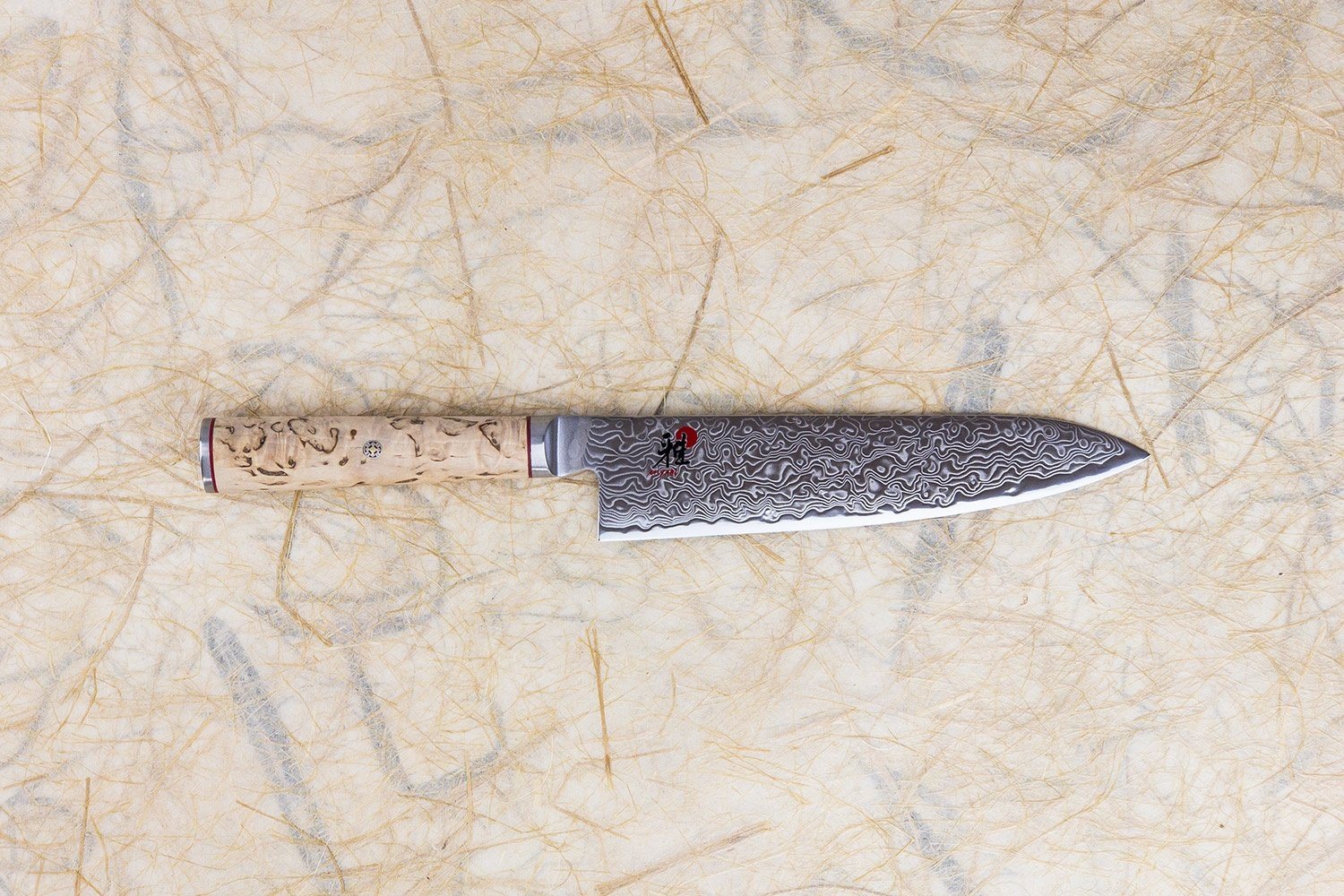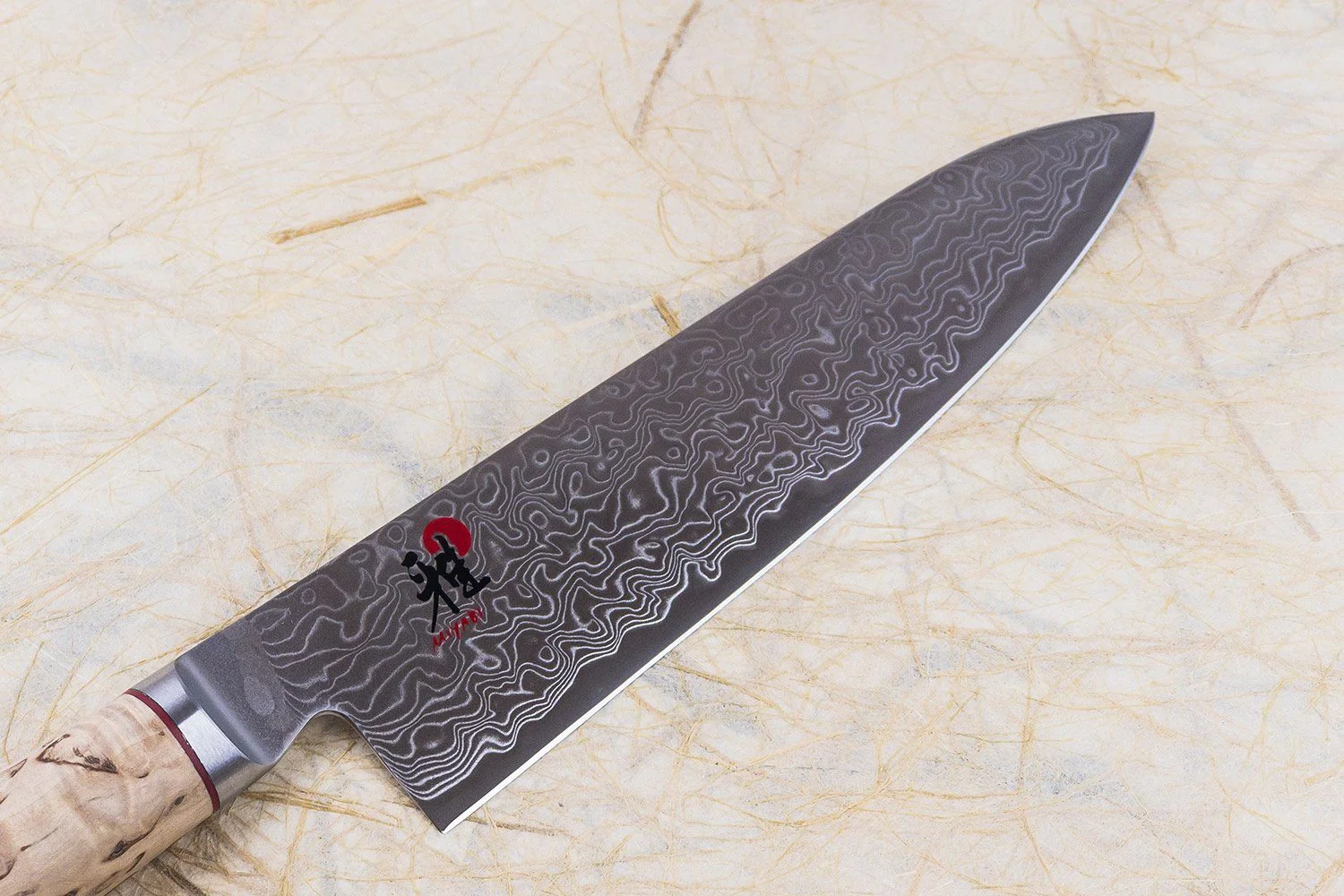
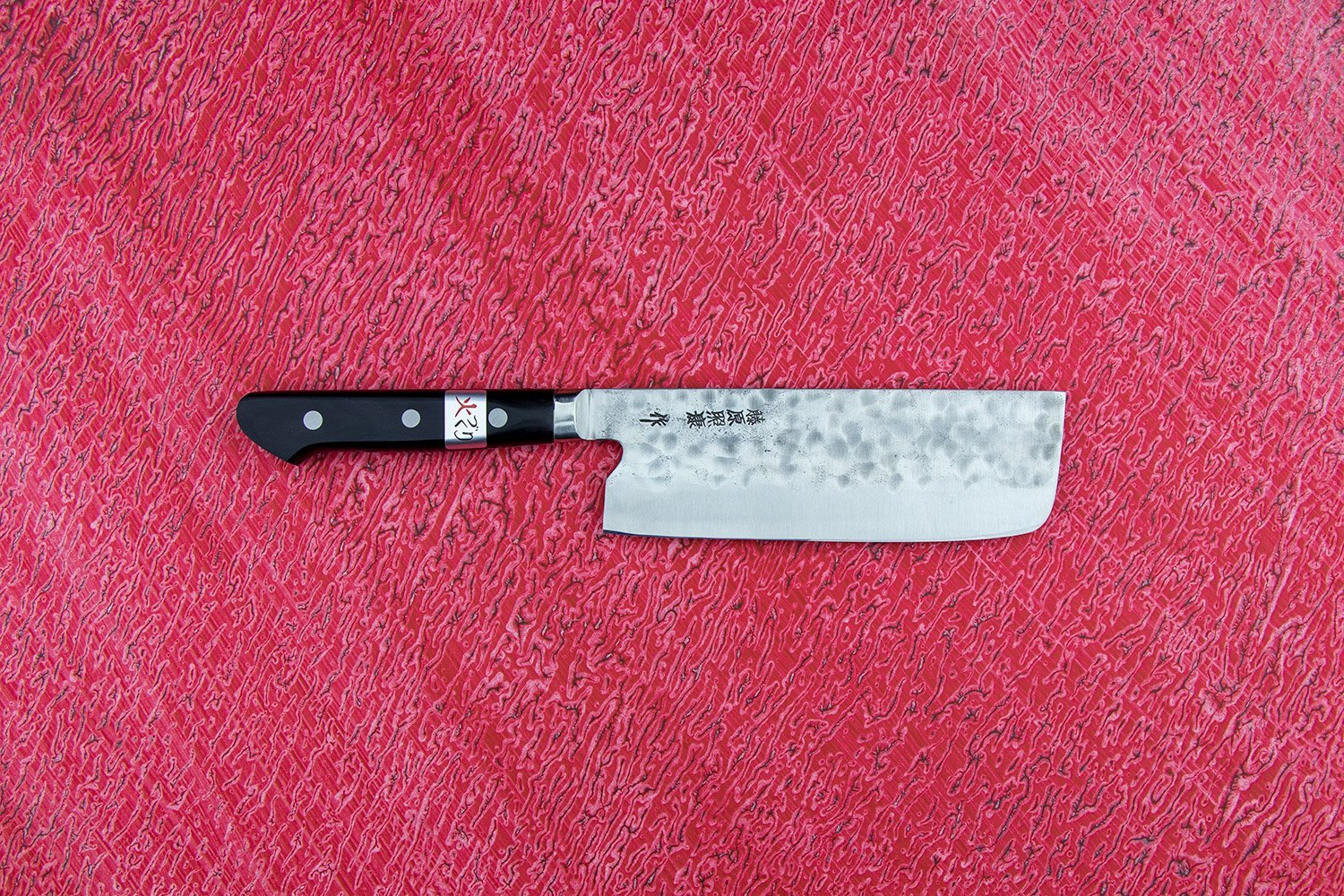
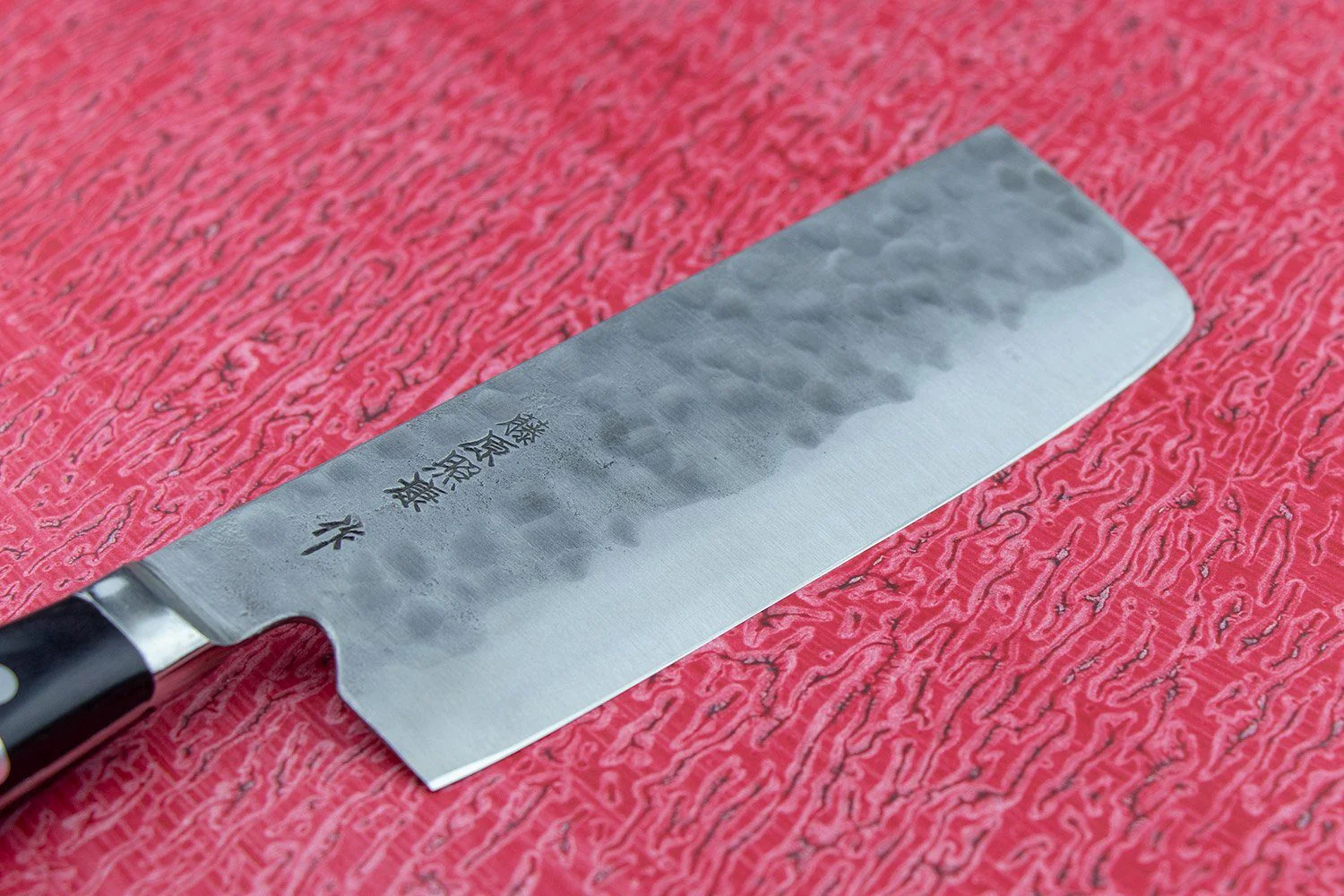
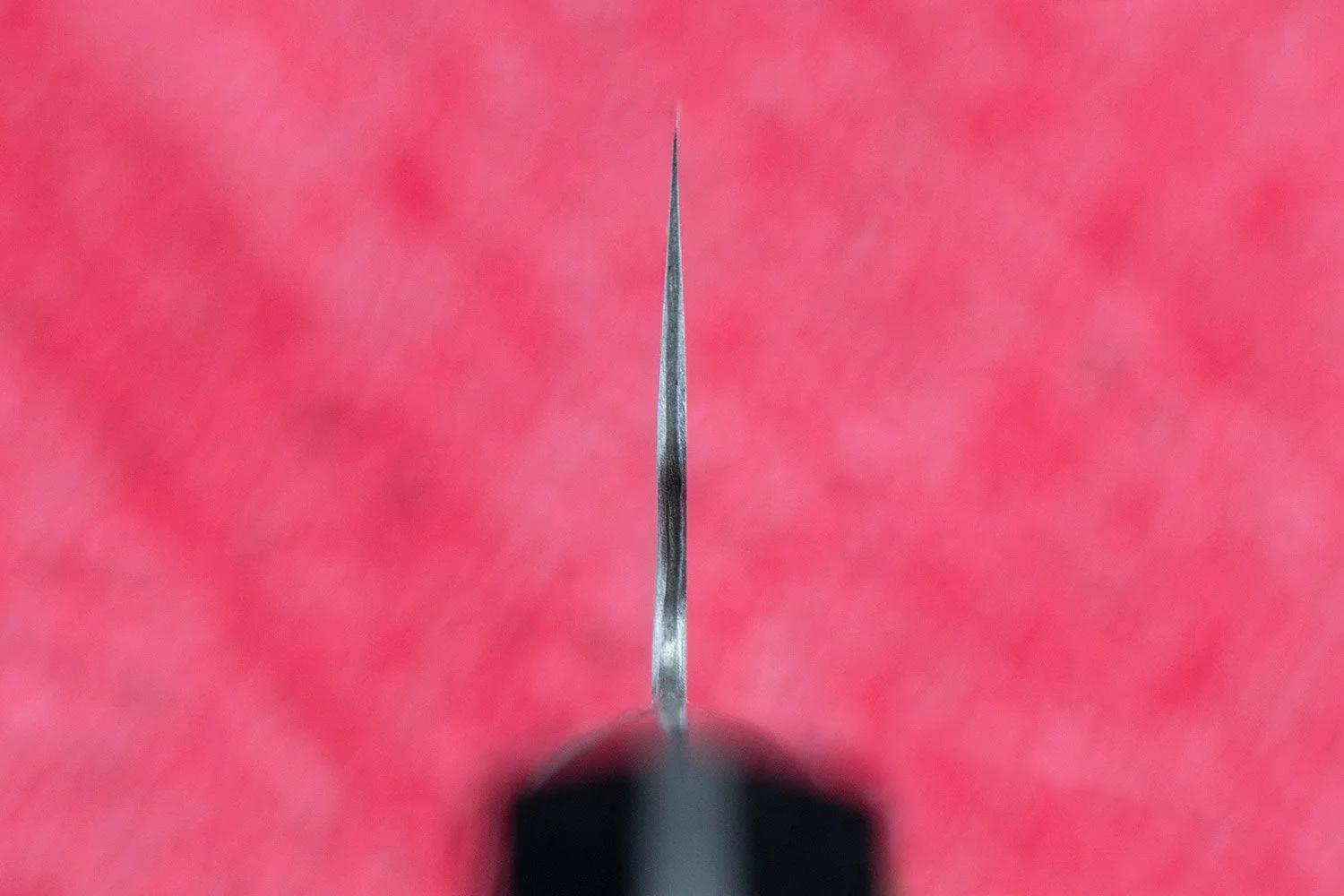
Fujiwara Maboroshi Nakiri 165mm
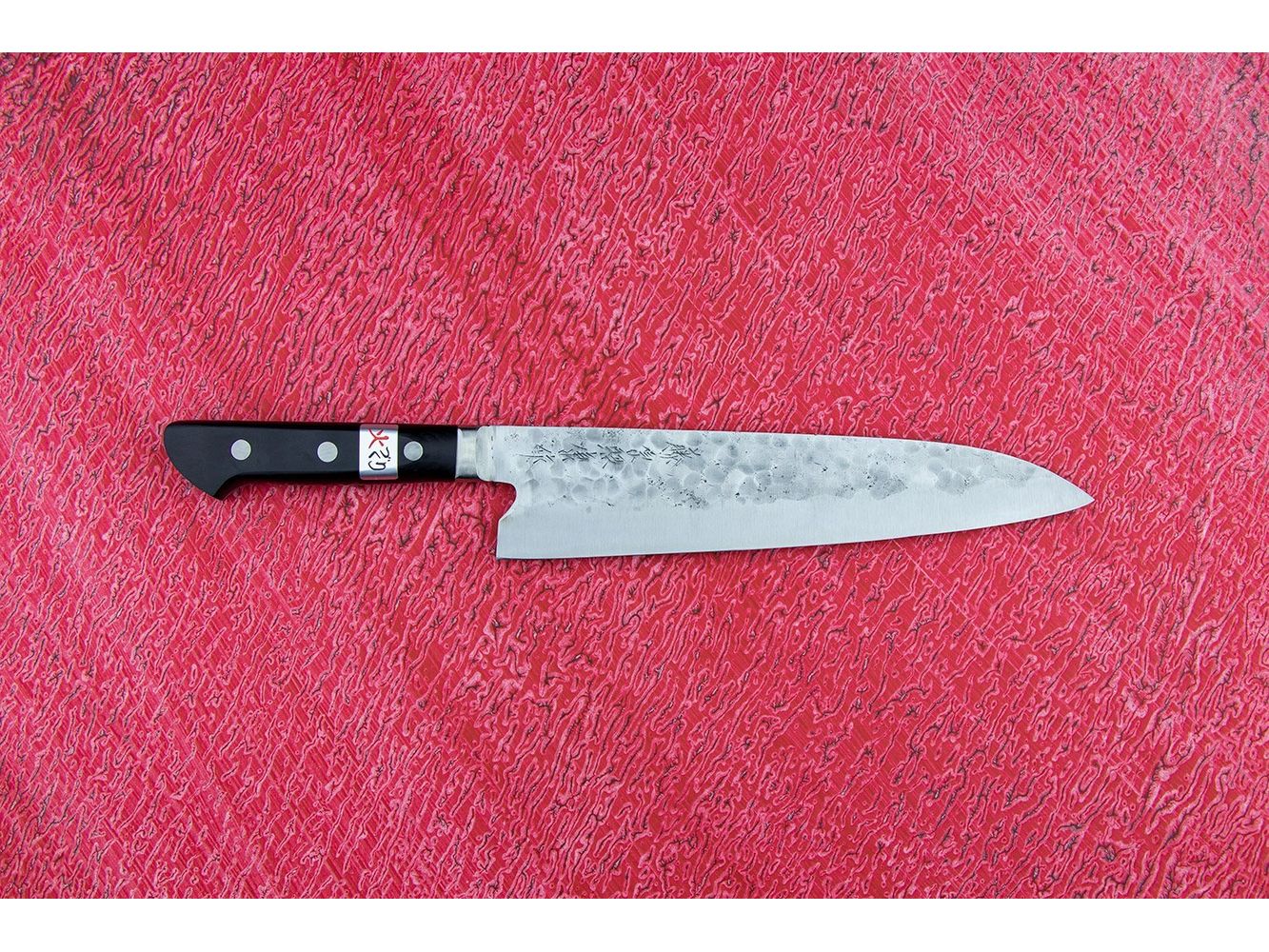
Fujiwara-san knows that chefs hold their knives by the blade in a ‘pinch-grip,’ so he created an iconic notch at the back of the knife for one’s index or middle finger to rest in.
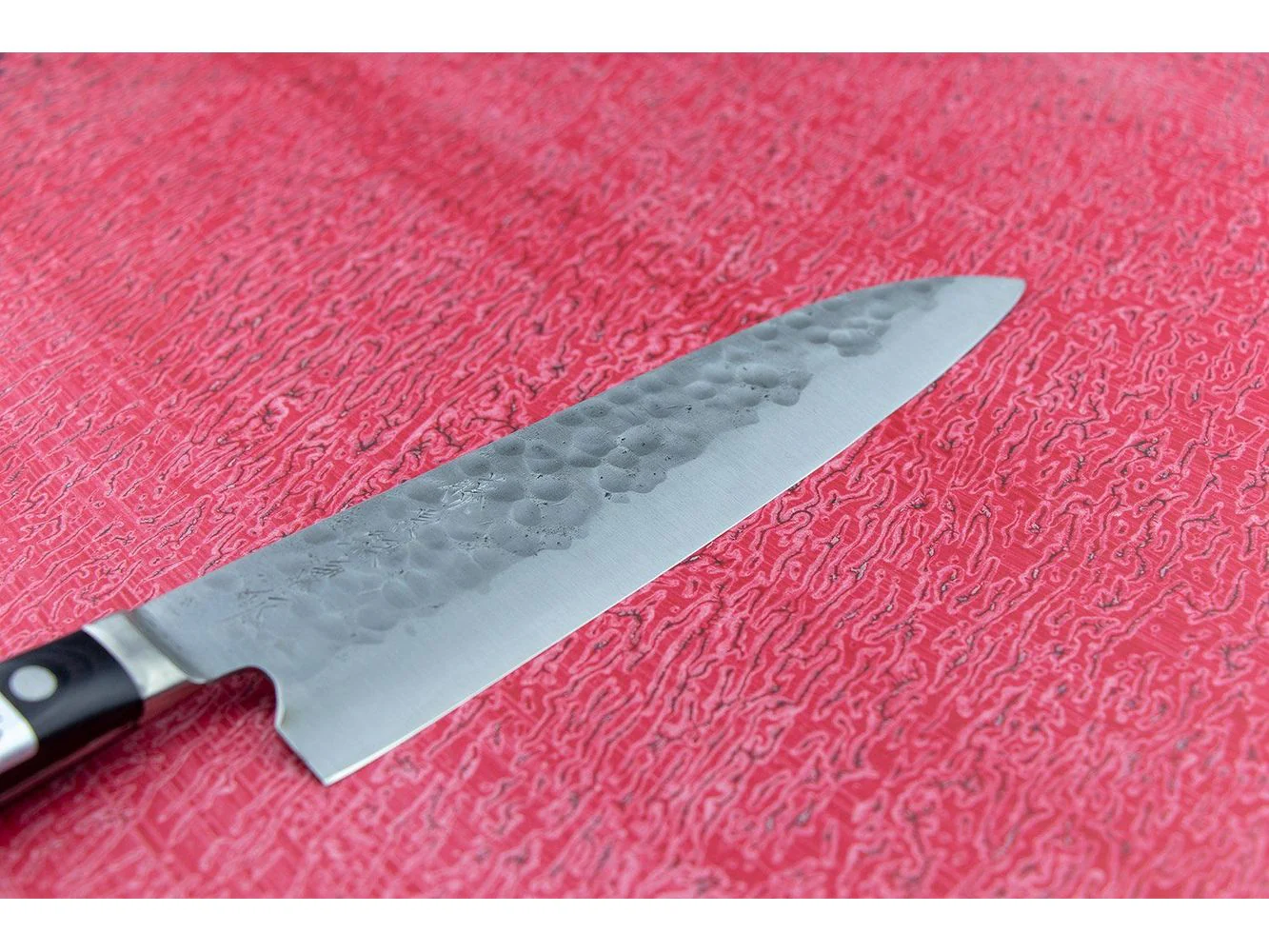
The Maboroshi no Meito, which translates to ‘Visionary Sword Celebrated in Victory,’ is made from Shirogami steel, and while it requires care to avoid rust, it gets sharper than just about anything else.
Fujiwara is one of the most revered names in the world of Japanese knives. The Fujiwara family started as blacksmiths in 1870, first forging farm tools, then swords. Many blacksmiths these days make a blade with a carbon steel core laminated with an outer layer of stainless steel for a high-performance knife with lower maintenance; this guy was one of the first to develop this technique. In addition to laminating his own steel, he pushes his steel to its absolute limit of hardness. This creates a blade that requires respect and care but stays sharp for a ridiculously long time.
Fujiwara-san knows that chefs hold their knives by the blade in a ‘pinch-grip,’ so he created an iconic notch at the back of the knife for one’s index or middle finger to rest in.
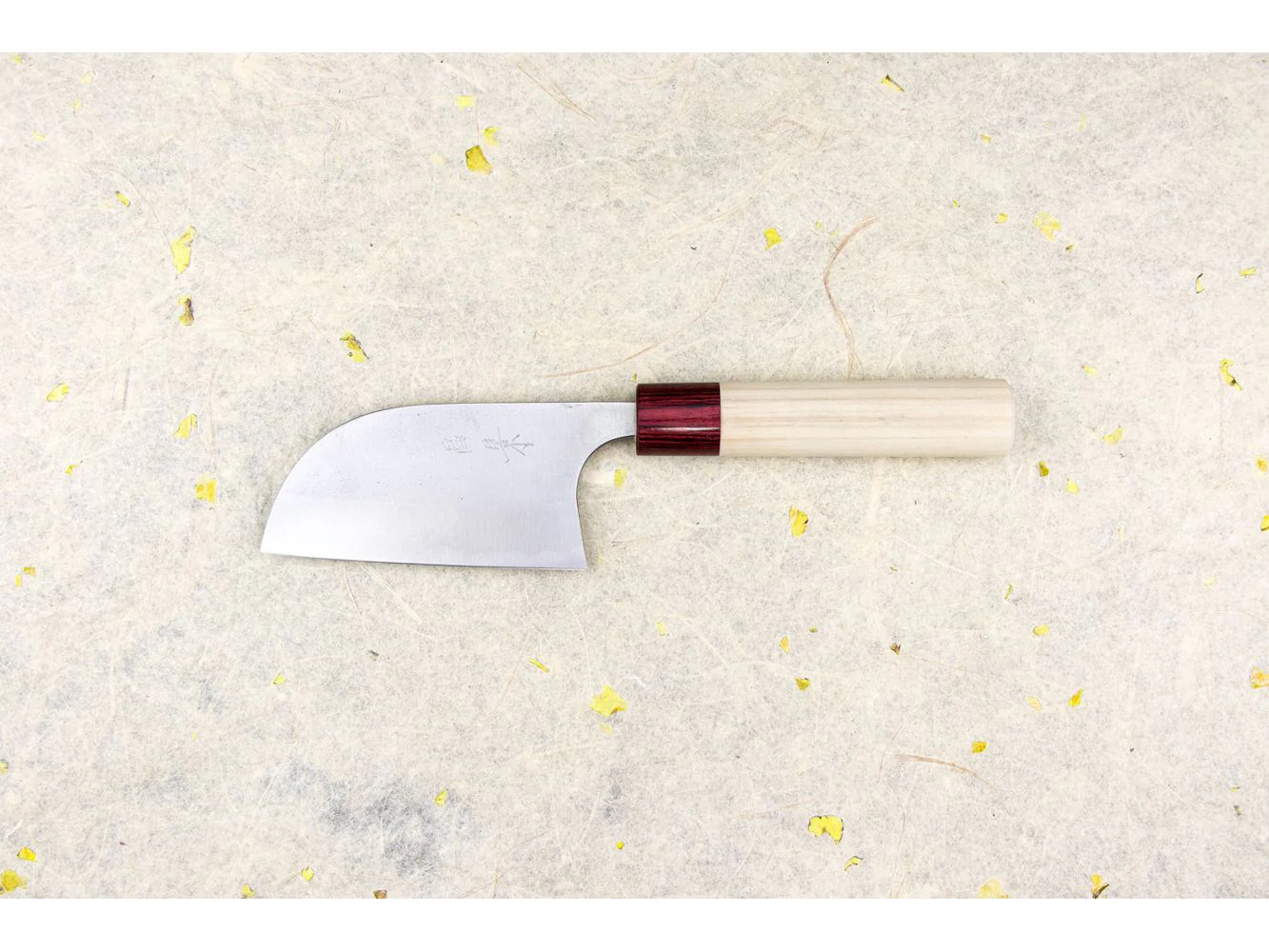
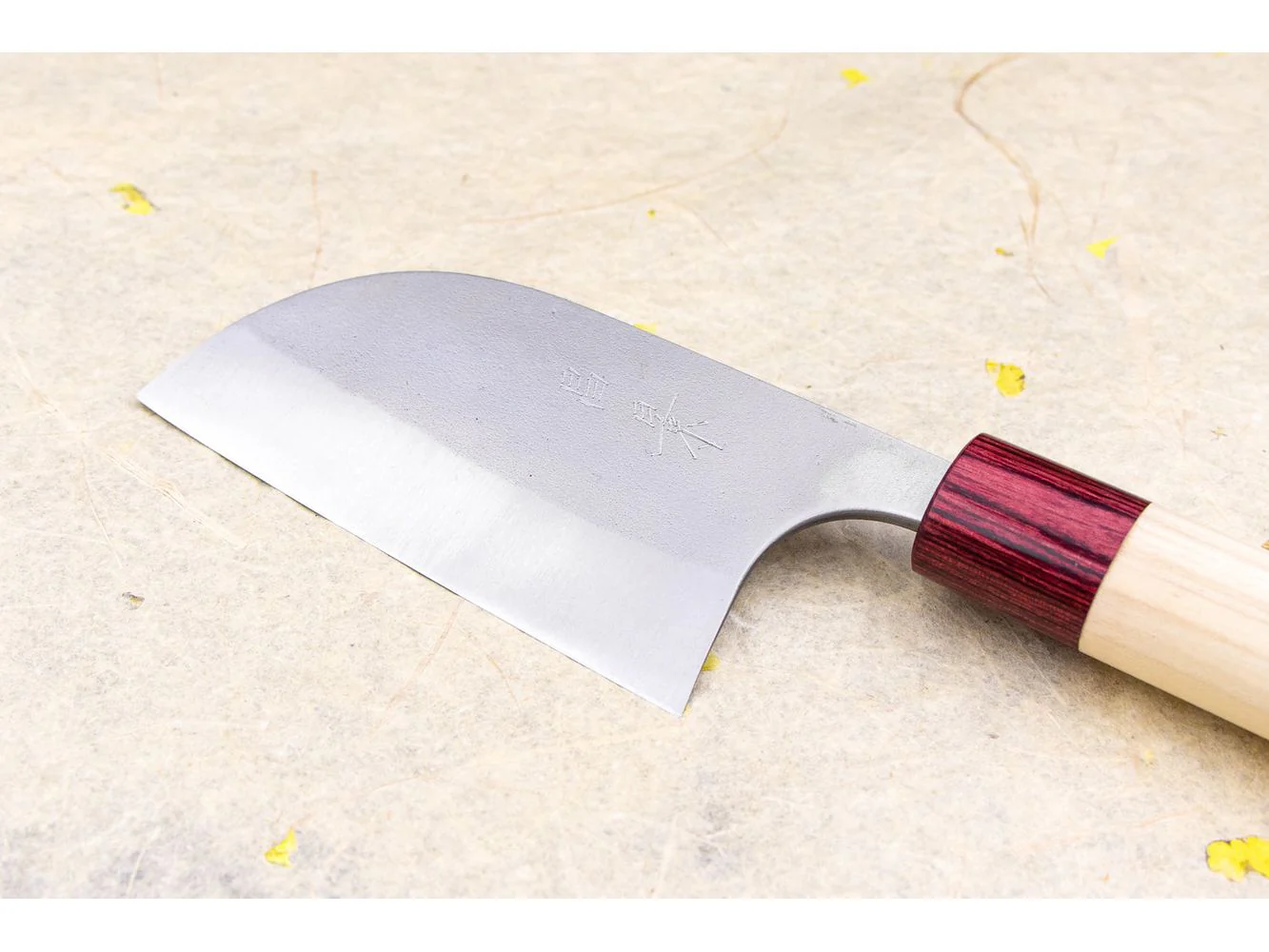
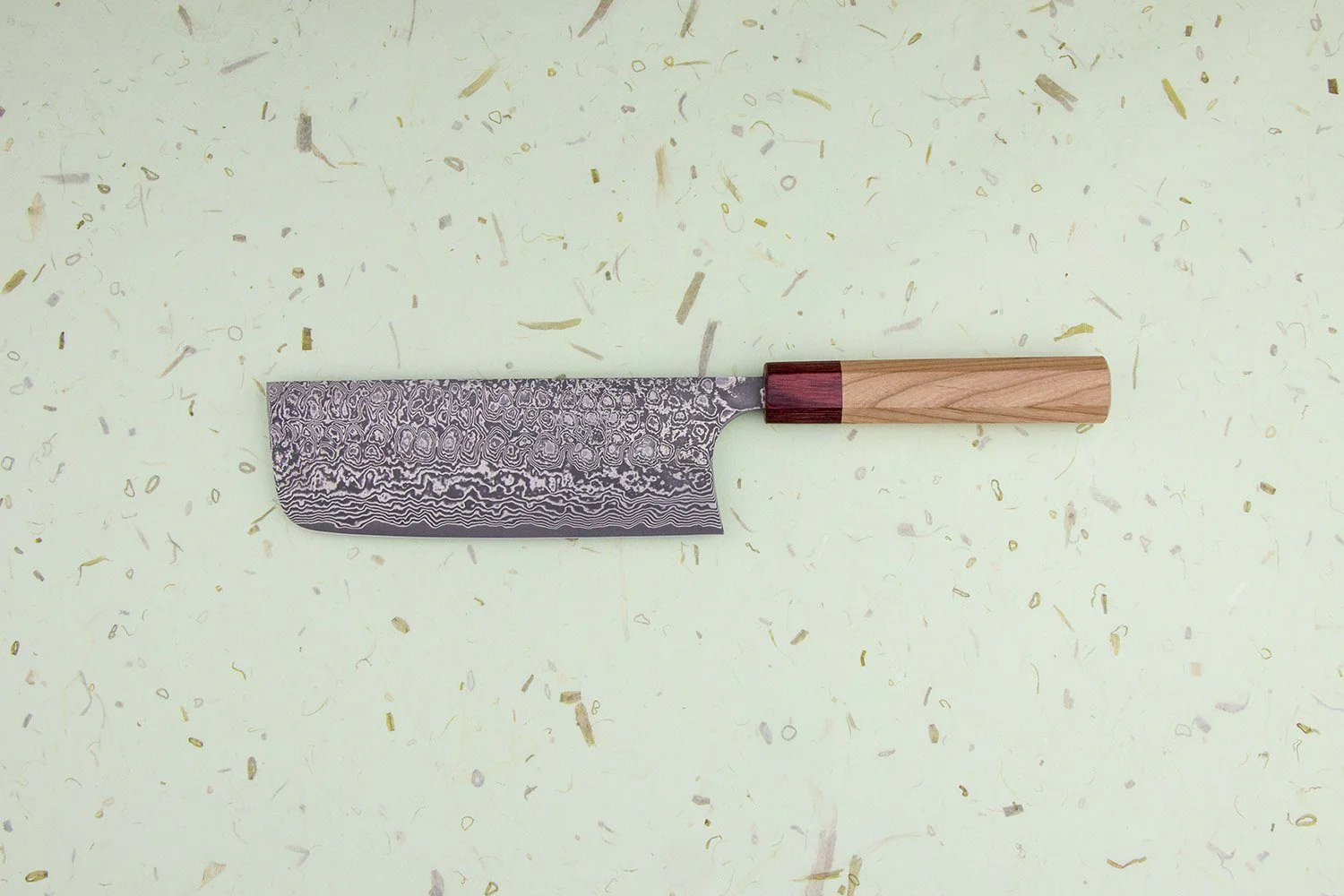
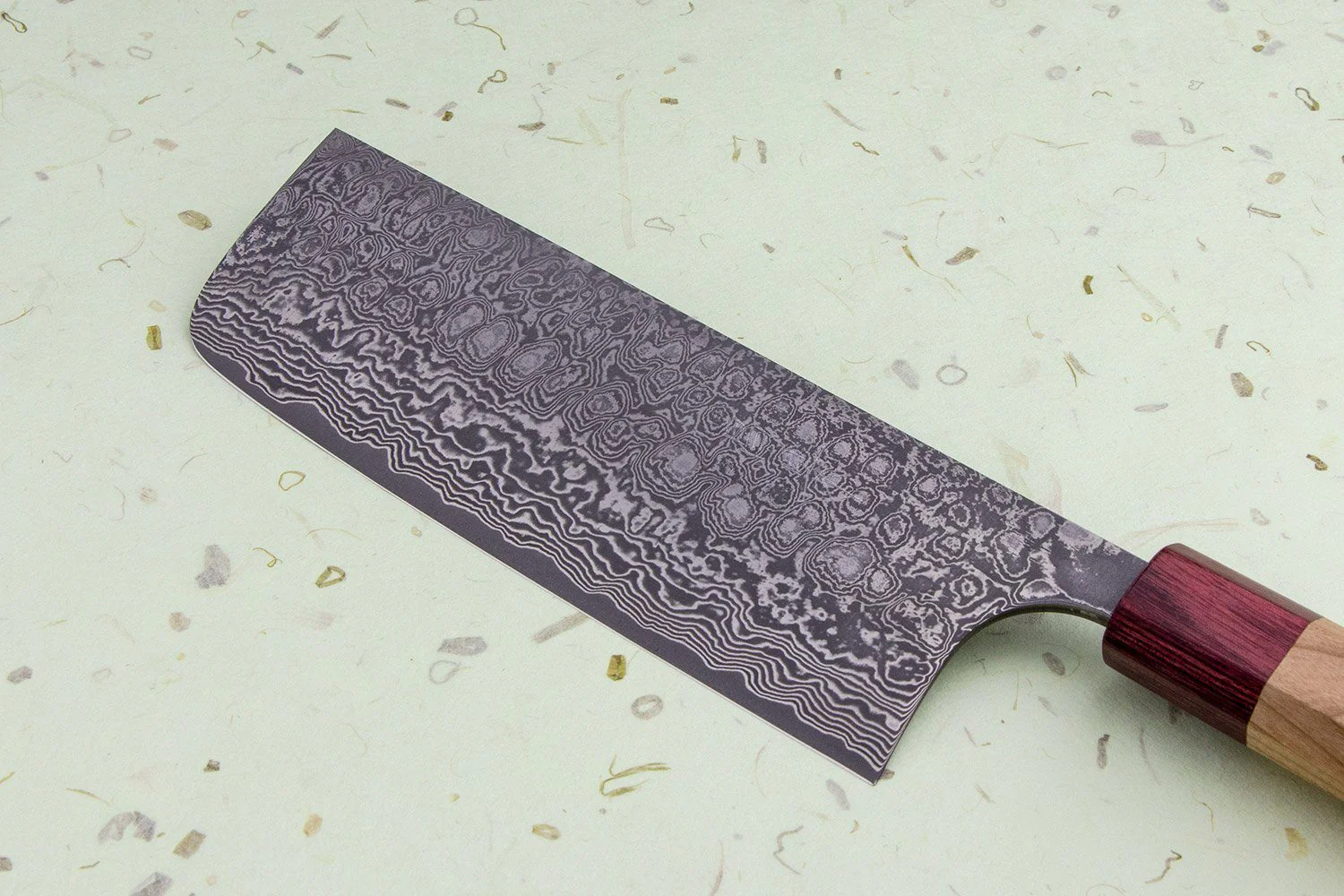
About the Shape - A Nakiri is a vegetable knife. Underutilized in the Western kitchen, the Nakiri’s flat blade is meant for the push/pull chopping of vegetables. Since the entire flat edge of the knife kisses the cutting board at once, you won't be turning the vegetable into an accordion. Accordion vegetables are still connected like a paper doll after you're “done” cutting them. To truly understand the awesomeness of a Nakiri we recommend making onion soup your first night with the knife. The ease of chopping will blow you away.
Original: $351.24
-65%$351.24
$122.93Product Information
Product Information
Shipping & Returns
Shipping & Returns
Description
Fujiwara-san knows that chefs hold their knives by the blade in a ‘pinch-grip,’ so he created an iconic notch at the back of the knife for one’s index or middle finger to rest in.
The Maboroshi no Meito, which translates to ‘Visionary Sword Celebrated in Victory,’ is made from Shirogami steel, and while it requires care to avoid rust, it gets sharper than just about anything else.
Fujiwara is one of the most revered names in the world of Japanese knives. The Fujiwara family started as blacksmiths in 1870, first forging farm tools, then swords. Many blacksmiths these days make a blade with a carbon steel core laminated with an outer layer of stainless steel for a high-performance knife with lower maintenance; this guy was one of the first to develop this technique. In addition to laminating his own steel, he pushes his steel to its absolute limit of hardness. This creates a blade that requires respect and care but stays sharp for a ridiculously long time.
Fujiwara-san knows that chefs hold their knives by the blade in a ‘pinch-grip,’ so he created an iconic notch at the back of the knife for one’s index or middle finger to rest in.
About the Shape - A Nakiri is a vegetable knife. Underutilized in the Western kitchen, the Nakiri’s flat blade is meant for the push/pull chopping of vegetables. Since the entire flat edge of the knife kisses the cutting board at once, you won't be turning the vegetable into an accordion. Accordion vegetables are still connected like a paper doll after you're “done” cutting them. To truly understand the awesomeness of a Nakiri we recommend making onion soup your first night with the knife. The ease of chopping will blow you away.